 Bruce John MANNION
Bruce John MANNION
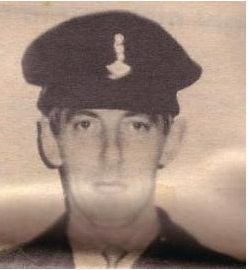
Bruce Mannion, aged 37, was last seen in the Dubbo RSL Club NSW on 20 July 1988. A man was convicted of his murder but Bruce's body has never been found.
On one occasion the killer took police to bushland in the Gnoo State Forest and indicated an area which was extensively cleared and excavated but no trace of Mr Mannion’s body was found.
If you have information that may assist police to locate Bruce's remains, please contact Crime Stoppers on 1800 333 000 or via Crimestoppers.com.au.
29 July 1988
10 April 1990 Canberra Times
On 14 February 1994, this Court heard an appeal against the
applicant‘s conviction and an application for leave to appeal
against sentence. The appeal against conviction and the
application for leave to appeal were dismissed: R
v  Kluska
  (Court
of Criminal Appeal, 14 February 1994, unreported).
(Court
of Criminal Appeal, 14 February 1994, unreported).
On 27 November 1998, Grove J heard an application brought by the applicant under s 13A of the Sentencing Act 1989 (since repealed) for a redetermination of the life sentence. At that time the applicant had served 10 years and 5 months in custody but was classified as a forensic patient and detained in a prison hospital.
His Honour dismissed the application and directed that there be
no further application for redetermination of the life sentence
for a period of three years: R
v Kluska (Supreme
Court of New South Wales, Grove J, 18 November 1998,
unreported).
NEW SOUTH WALES COURT OF CRIMINAL APPEAL
On 27 July 1988, the applicant was apprehended and charged with the murder of Bruce Mannion. Having been committed for trial, he was indicted before Grove J on 9 April 1990. He pleaded "Not guilty". The trial proceeded before Grove J and a jury. The applicant was found guilty as charged on 22 May 1990. On 10 August 1990, Grove J sentenced the applicant to life imprisonment as he was, at that time, required to do by law in the absence of mitigating circumstances. The sentence took effect from 28 July 1988.
Kluska said: "I produce the notes taken by my solicitor at the time a Miss Priscilla Adey and my notes with evidence to show that the evidence of these witnesses is either in disput [sic] to prove my guilt and also for me to prove that those witnesses and others are deliberately mistaken or lying about their evidence about me. Also that my legal counsel never properly presented the case before the court with the facts I have produced, which shows the negligence of my legal counsel to present my case properly before the court, thus, forcing me to become convicted on uncredible [sic] evidence on the Crown [sic].
27. That the Honourable K Enderby QC (Chairman) of the Serious Offenders Review Board did authenticate and approve of the SORC report of the 16th of Oct 1997, which went before the Supreme Court for my life redetermination of sentence [sic] in Dec 1998.
The fact is that SORC refused to investigate any of the issues raised in the report or to check if the information is correct and based on true FACTS! My evidence shows that the SORC Report presented before the Supreme Court is biased towards me [sic] for 2 reasons.
Firstly, No good conduct reports were ever presented only the alleged bad one's [sic] which were all based on lies anyway. This proves that SORC did deliberately lie before the Supreme Court in presenting a report they knew was false, biased and intended to deliberately cause me harm by presenting this report which is not based on FACTS - nor is it beyond reasonable doubt.
Secondly, the SORC report is incredible, unreliable, false - does not prove anything based on facts and does and is not a report that is beyond reasonable doubt and must become inadmissable [sic] as evidence."
On 28 July 1997, after further non-compliance with his medication, the applicant was transferred to a hospital pursuant to s 97(1) of the Mental Health Act the Chief Health Officer having received certification from Drs O’Dea and Wilcox that the applicant was a mentally ill person as defined under the Act. He was at that time diagnosed with a delusional disorder manifested by psychosis with multiple persecutory and somatic delusions and an antisocial personality disorder. (I note that in other reports the diagnosis at this time has been identified as a severe paranoid schizophrenic illness which remains his current diagnosis subject to the illness now being described as chronic.) During the admission in 1997 it was noted that the applicant believed there was a conspiracy to kill him involving doctors and nurses and prison officers and, in particular, that he was convinced that the treating psychiatrists were hiding in neighbouring toilets while he was defecating and that they were talking to him telling him he would suffer until he told them where the deceased’s body could be found. He was recommenced on antipsychotic intravenous medication. He has remained hospitalised within the prison system as a forensic patient for extended intervals since that time.
In summary, the facts detail the relationship between the applicant and the deceased through their mutual involvement with the Anglican community at Dubbo following the applicant's release from custody to parole in 1987 after serving sentences for kidnapping, armed robbery, escape from lawful custody and being armed with intent to commit an indictable offence. The deceased owned a yellow Holden sedan and a Kawasaki motorcycle. He was last seen alive in the applicant's company at about 9:30pm on 20 July 1988 at which time the applicant was heard to ask the deceased whether he was ready to go home. The deceased failed to attend work the following day and when he did not arrive at his parents’ home in Sydney by arrangement on the evening of 22 July 1988 his father reported him missing to police. The applicant was seen in Dubbo on 21 July in the deceased's yellow sedan and riding the deceased’s motorcycle. In another vehicle to which the deceased had access also in the applicant's possession after his disappearance police located a forged letter of resignation in the deceased's name. On 22 July the applicant, using the deceased's name, booked into a Sydney hotel with two young women. During the course of that day he withdrew $2000 from the deceased's bank account. This was the first of the number of transactions on that account. He also removed property from the deceased's home.
20 The agreed facts note that the applicant admitted assuming the deceased's identity, utilising his vehicles and his bank accounts for his own purposes and signing the purported letter of resignation when arrested but denied any responsibility for the disappearance and murder of the deceased.
21 His Honour referred extensively to the report of Dr O’Dea and concluded that he would have serious concerns about the risk which the applicant would present to the community were he to cease his medication.
Even as recently as to Dr O’Dea in February this year, the applicant spoke of the time “once he has been acquitted of the murder”. As I have said previously, the proof of guilt was overwhelming but I cannot determine whether these protestations are aspects of the applicant’s mental condition or are false postures which he is deliberately presenting. Over the years the applicant has from time to time confessed his guilt and then recanted his confession. Bruce Mannion’s body has never been located. On one occasion when a confession by the applicant was “current” he took police to bushland in the Gnoo State Forest and indicated an area which was extensively cleared and excavated but no trace of Mr Mannion’s body was found.
12 Inter alia, the applicant has written to the then Commissioner of Police seeking to provoke missing persons action in relation to the deceased. He has also at times asserted that Bruce Mannion has in fact been found and buried in a cemetery plot in Sydney. To my observation Mr Mannion’s mother has attended the trial in 1990, the hearing in 1998 and the hearing of this application. I am informed that she is now eighty years of age. In the years that have passed since their son’s murder, Mr Mannion’s father has died but he has three surviving brothers. It is plain that the hope of Bruce Mannion’s family that his body might be found is dependent upon relevant information being forthcoming from the applicant. It is impossible for me to know the extent to which the applicant’s mental illness contributes to his unwillingness to locate it.