 Christopher Dale FLANNERY
Christopher Dale FLANNERY
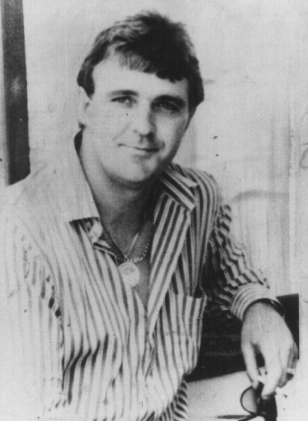
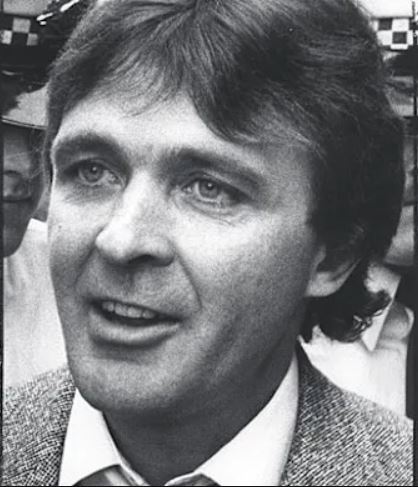
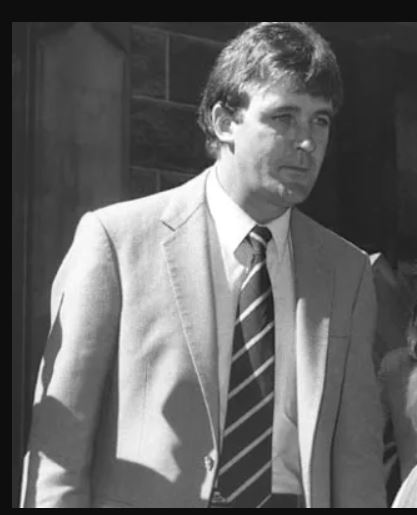
Christopher Dale Flannery, 36, was last seen in Sydney on 9 May 1985. He has not been seen or heard from since. There is reason to believe that he may have come to harm.
If you have information that may assist police to locate Christopher please contact Crime Stoppers on 1800 333 000 or via Crimestoppers.com.au
WAS Christopher Flannery dumped at sea, encased in concrete, or chopped and mulched? One crime vet says he knows the truth about a hitman some think killed 14.
THIRTY years after reputed hitman Christopher Dale Flannery vanished from the face of the earth, mystery still surrounds his death.
It is one of Australian crime’s most intriguing mysteries that’s had nearly every gangster from Sydney’s Kings Cross to Melbourne’s Chinatown offering up a theory.
The man known as “Mr Rent-A-Kill”, or “The Shovel”, vanished without trace on May 9, 1985 in the wake of Sydney’s gangland war.
Suggestions range from him being garotted and dumped at sea and encased in concrete foundations in Sydney to being meat clavered and mulched and scattered in Victoria.
One dying Melbourne crime veteran this week told the Herald Sun his version of events is the true one.
He says he knows what happened because he was with Flannery’s elder brother Ed, a respected lawyer, who received a phone call from Flannery on the day he disappeared.
The Melbourne gangland source, who asked not to be named due to his ill health, said he was at Flannery’s brother’s Brunswick flat discussing an outstanding court matter when the call came through.
He believes Flannery was killed in Melbourne after Flannery rang his brother to say he’d arrived at Tullamarine airport.
According to the gangland source, Flannery said: “I’m getting in a cab now.”
Flannery’s brother became worried when he failed to arrive, the gangland source said.
Sydney cab driver Colin Sefton said he drove Flannery to the airport on the day he vanished.
According to Mr Sefton, his passenger told him he did not have an airline ticket but wanted to be dropped off at a domestic terminal.
It was said Flannery went to the TAA terminal.
Melbourne taxi driver Brian Baker swore he later saw Flannery at a St Kilda cab rank.
The Melbourne cabbie said a man with a wad of $50 notes joined Flannery, and the two got into a car that quickly drove away.
The Melbourne gangland source told the Herald Sun he believed two known criminals — one who had a bond with Flannery and is now dead — scooped Flannery up in Melbourne, killed him and buried his body in the Dunolly region in north western Victoria.
Victorian and NSW police came to Flannery’s brother’s house in search of the missing hitman days after his disappearance, the Melbourne gangland source said.
A popular theory among many has Flannery buried in a barrel in the sand dunes at Botany Bay, near Sydney Airport.
According to another theory, Flannery was killed at the Sydney harbourside mansion of his employer — the late colourful racing identity George Freeman.
Flannery was garotted in Freeman’s boatshed and dumped at sea, according to another rumour.
Melbourne underworld toecutter Mark “Chopper” Read suggested Flannery’s body was fed through a woodchipper on a farm near Seymour in rural Victoria.
Some interstate crooks, meanwhile, believe bent NSW cops killed Flannery in Sydney and his body was dumped in the ocean.
ON the morning of the day of his disappearance, the Melbourne-born Flannery left his inner-Sydney apartment with an apparent plan to drive to Freeman’s house for an appointment.
He had with him a loaded .38 handgun and a small bag containing an American Express card, a wig, binoculars and a fake driver’s licence and passport in the name of Christopher James.
As Coroner Greg Glass would later say: “He had a false name, used disguise and was living on the run.”
Flannery’s car wouldn’t start, so he went streetside to hail a taxi.
Cabbie Mr Sefton said he drove Flannery to the airport.
Others suggest corrupt police offered Flannery a ride, and killed him.
The inquest was told Flannery was an egotistical, paranoid and erratic braggart who talked of “popping off” his rivals.
Four months before he disappeared, an enemy armed with a machine gun had opened fire on Flannery and his wife outside their suburban home.
The attack saw Flannery move to the inner-Sydney apartment where he was living when he vanished.
Sydney crime kingpin Arthur “Neddy” Smith said one person Flannery trusted was a corrupt police officer.
Smith claimed that after Flannery disappeared, that corrupt policeman said to him: “Chris had to go, mate. He was becoming a danger to us all.”
In his eventual finding after a long inquest, Coroner Glass suggested Flannery was probably executed by or for someone he trusted, with strong suspicion surrounding the corrupt former policeman Smith referred to.
Mr Glass said in part: “I find that Christopher Dale Flannery died on or about May 9, 1985 but as to the place of death, the evidence adduced does not enable me to say.”
Mr Glass added he was “comfortably satisfied that Flannery was betrayed, deceived, possibly lured into a motor vehicle by someone or by some persons whom he trusted and was then killed, with the remains being disposed of in a manner unknown.”
While the evidence was insufficient to establish a prima facie case against the corrupt former policeman, Mr Glass said that former officer had the motive and opportunity to cause harm to Flannery.
That former policeman vigorously denied murdering Flannery.
“I don’t know what happened to Chris Flannery,” he said after the June 1997 finding.
“I know he was certainly hated by many people but I don’t know who actually killed him.”
After the inquest, a Sydney police source told the Sunday Herald Sun that Flannery was a mad dog salivating behind a suave facade.
“But he was never highly regarded up here,” the source went on.
“Sydney crims didn’t have much respect for him. They thought of him as just another Melbourne s---head.”
George Freeman, who denied any suggestion he was involved in Flannery’s disappearance, had a different view, saying Flannery was a frightening man.
He once told reporters: “There was not a person in Sydney that was not afraid of him. He was one of the worst crooks there’s ever been.”
The Melbourne gangland source who spoke to the Herald Sun this week said he knew Flannery well and often socialised with him when he was in Melbourne.
“He was a f---ing nut case but I liked the bloke,” the dying gangland source said.
“His piercing blue eyes were psychotic. Jail had done a lot of harm to him. There weren’t many who could stare him down.
“He was a cold, hard person in that respect.”
In 2005, hopes of solving the Flannery mystery emerged with the discovery of unidentified human bones at a construction site at Botany Bay.
It was thought the male skeleton may have been Flannery’s.
DNA tests later proved it was not.
FLANNERY was a fearsome, unpredictable and maniacal character.
Born in Brunswick, he racked up convictions for offences like housebreaking, stealing cars, assaulting police, carrying firearms and unlawful carnal knowledge.
He also mixed with known criminals linked to the Painters & Dockers Union.
In 1974, after he and two associates allegedly violently robbed a Perth department store, he was arrested in Sydney by the corrupt police officer he would come to trust.
Back in Perth, Flannery was acquitted of the robbery before Victorian detectives arrested him on an outstanding warrant.
After his release, Flannery worked as a bouncer and standover man for brothel owners and as a “repo man” for a private detective.
His stature grew.
Police believe he killed many for money.
Maybe as many as 14 people, although some who know Flannery dispute that figure.
In early 1980, Victorian barrister and businessman Roger Wilson disappeared while driving in East Gippsland.
His body was never found.
Flannery was charged with murder, along with an associate named John Henry “Weary” Williams and another man.
The Crown’s unreliable main witness was Deborah Boundy, Williams’ then 19-year-old girlfriend.
She disappeared on Christmas Day in 1981 and Flannery and his co-accused were duly found not guilty of Wilson’s murder.
As he left the court, Flannery was arrested and charged with the May 1979 murder of Sydney vice figure Raymond “Lizard” Locksley.
Flannery was acquitted after two trials because of conflicting alibis.
By then he was entrenched in the Sydney crime scene, although his wife, Kathleen, would later deny he was a contract killer.
“We were a normal, average family,” she would tell the Sunday Herald Sun.
“My husband has never been convicted of any serious offence apart from rape — and that was before I knew him.”
As his criminal career continued, Flannery was implicated in the attempted murder of honest NSW cop Michael Drury.
It was alleged Flannery was employed by drug identities whom Drury was investigating.
According to Drury’s evidence, he feared his life was in danger after he knocked back a $25,000 bribe to change his drug case evidence.
On June 6, 1984, Drury was shot in the stomach and the chest through a window in his kitchen.
The trigger man was widely said to have been Flannery.
He was also linked to the fatal shooting of Sydney underworld figure Tony “Spaghetti” Eustace, who copped six bullets in the back on April 23, 1985.
In his finding into that killing, Coroner Glass said the possibility that Flannery was involved in some way “could not be ruled out”.
“It is a matter of record that the police believe the missing hitman, Mr Flannery, to have been a hired killer who ... was responsible to some extent for the death of Eustace,” Mr Glass said.
Eustace chose not to reveal the identity of his killer, telling detectives to “f--- off” before he died.
In the days after being questioned by police about the Eustace shooting, Flannery disappeared.
Where his cold bones lie is likely to remain one of Australia’s great crime mysteries.