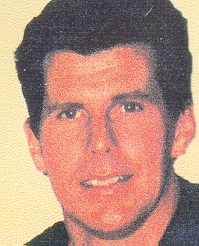
Gerard MOONEY


    Sex: Male
Date of Birth: 1960    
At time of disappearance -          
Age when missing: 35 Height (cm): 188 Build: Medium
Hair Colour: Brown Eye Colour: Green Complexion: Fair
Nationality: Irish        
Circumstances - Irish national Gerard Mooney was last in contact with family in 1996. He lived in the Marrickville area of Sydney. There are grave concerns for his safety and welfare.

From Doe Network -

Circumstances of Disappearance:
Gerard Mooney, of Marrickville in Sydney's inner west, was last seen on May 14, 1996 when he paid his rent at a local real estate agent. He had left his home with his bike helmet, drivers licence and ANZ bank card.

His bank accounts had not been touched and a police search of his Marrickville, Sydney unit found all his personal belongings intact, including his passport.

His bike was discovered in a laneway near his unit on May 18, 1996 four day's after he was last seen. He was a cyclist and often rode to work, at a printers in Banksmeadow, authorities are trying to determine how his bike ended up in the lane way.

Gerard Mooney migrated to Australia from Ireland and settled in Marrickville after moving from Melbourne.

Gerard was last in contact with family in 1996.


A note from Gerard's sister Rita -

"Gerard was a keen cyclist and his bike was found in a lane in Marrickville near his home, 4 days after he went missing."

If you know anything about the disappearance of Gerard Mooney please call Crime Stoppers on 1800 333 000.

The Irishman who went missing in Sydney 27 years ago - RTÉ Documentary On One

Updated / Friday, 6 Oct 2023 12:38


Gerard Mooney went missing in Sydney 27 years ago.

His family and the detectives who investigated the case in 1996 believe people know what happened and it's time to come forward.

Below, poducer Tim Desmond writes about this week’s Documentary On One: Missing Gerard, which tells the story of how a 36 year old from Glasnevin in Dublin simply vanished from near his home in Sydney Australia in 1996, leaving very few clues as to what had happened - listen to it above.


I first met Rita, Gerard's sister, back in 2019. She spoke fondly of her brother and how his sense of adventure had brought him to Australia in his twenties. Rita showed me photos of him and his treasured custom built racing bike, describing where he was and what he was doing.

As he made his new life down under, Gerard sent these photos to Rita and her family, he was a steady letter writer. There was a sadness in her voice as she told her and her family’s story of missing her brother- how having not heard from him in weeks ( which wasn’t that unusual in the 1990s) Rita had made the call to Sydney and reported him missing. Rita and her family then became one of hundreds of Irish families and friends of a missing person.

Gerard Mooney is one of thousands of Irish people who go missing every year. Most of them show up with a few hours or days , a small number decide to stay away, to make a new life perhaps or to end the one they’ve been living. An even smaller number still are never seen again. Gerard had been living in Australia for about ten years, he had become a citizen and loved his life. Then, one day in May of 1996 he just seemed to vanish. Rita says:

"A man who is six foot four like Ger just didn’t disappear off the face of the earth, how could they?".

Gerard was a keen cyclist and cycled to work regularly. His custom-built racing bike was found less than a mile from his home but there has been no sign of him since. An extensive search was launched by New South Wales police into Gerard’s disappearance but apart from his racing bike, nothing was ever found.

I was a little surprised when I contacted two of the detectives who had worked on the case.

Tony Hughes and Dave Byrne have since moved on from the Police, but they were very open to talking about the investigation and the prospect of any new developments being generated by getting the story out there again.

What struck me about them was how this case has stayed with them, it seems to be the one they couldn’t forget, as it were.

Dave Byrne says "The investigation was void of any type of physical evidence that we could utilise to attempt to paint a picture or work out what happened to him."

The only thing they had was his racing bike and that led to the conclusion that he had left his apartment on it and that it had been abandoned near to where he lived. The bike might never have been seen again if it hadn’t been found and handed in to Police. The police officer who took the bike into the station recognised a photograph of it in Gerard’s apartment when he was reported missing weeks later and made the connection.

In spite of the lack of physical evidence, the investigation was very thorough; air searches were carried out, banking records were looked at, pubs he might have been to , friends and co-workers interviewed, they said themselves they left no stone unturned, all of Gerard’s relationships it seems were looked at , with no links emerging as to what might have happened. Gerard was declared deceased three years after going missing , by an inquest in 1999, however the case remains open in Australia.

For the documentary, I also met with Detective Sergeant Carmel Griffin, from the Garda Missing Person unit who explained for me the concept of 'ambiguous loss’, the idea that for the families and friends of people who go missing there is a sense of loss and sadness that remains unresolved, often for many years. That loss occurs without a significant likelihood of reaching emotional closure or an understanding of what might have happened and can complicate and delay the process of grieving.

Gerard’s sister Rita contacted Carmel and her team after reading about advances in DNA which were being used to match and identify relatives to bodies recovered, sometimes long after a person went missing. The first thing Carmel did was invite Rita to the annual missing person’s day, organised by the Department of Justice and held in Dublin every December. Ireland has had a DNA database since 2015; Australia has developed one more recently. The Irish Garda Missing Persons Unit were able facilitate the taking and sending of Rita’s DNA sample to Australia.

The very act of making that potential connection to her brother means a lot to Rita "it just feels that you are actually progressing, you are still being active in trying to find him. It mightn’t be this year, but it could be next year." From now on , each new discovery of human remains in Australia will be checked against Rita’s sample.

Detective Sergeant Carmel Griffin says " I don’t think , unless you’ve gone through it yourself that you can truly understand what the families and indeed friends of missing person go through".

Apart from the prospect of a DNA match ,the former Police Officers who worked on the case, Tony Hughes and Dave Byrne, also believe the time is right for people who know what happened to Gerard to come forward. Rita, who travelled to Australia at the time of her brother’s disappearance, says that the neighbourhood he lived in had many people whose first language wasn’t English and at the time might have been wary of Police enquiries. She’s hoping that given the passage of time people might be in a better place to reveal the secret of her brother’s disappearance.

Both ex-officers recognise the effect a case like this has on families. Tony Hughes says " it’s admirable for Rita to still hold some hope of finding an answer on behalf of her family and herself and I think that’s a testament to the love she’s got for Gerry’

Listen to more from RTÉ Documentary On One here.


Family’s heartbreaking plea to solve 30-year mystery of missing Irishman Gerard Mooney

‘His lunch was in the fridge and his milk was dated May, that’s how we established the date he went missing.’

By Freddy Pawle May 15 2026

Irishman turned new Australian citizen Gerard Mooney was still settling into his Sydney apartment when he vanished without a trace.

Three decades later his family are still seeking answers about what happened to him.

It hasn’t helped that Mooney’s disappearance went unnoticed for several months.

He had only recently moved to Marrickville in Sydney, after nine years living in Melbourne, when he was last seen on May 14, 1996.

But the very short time the then 36-year-old had been in his new home meant there were very few people he knew locally who would miss him.

“When he didn’t show up for work, the boss just assumed he’d left and he never contacted anyone, neither police nor family,” Mooney’s sister, Jean MacDonnell, told 7NEWS.com.au.

“He had lived in Melbourne and had friends there ... but none close enough (in Sydney) to report him missing.”

Mooney had first immigrated from his home in Dublin to Melbourne in 1987 and fell in love with Australia, later becoming a citizen.

MacDonnell said he would write home periodically and had returned for their mother’s funeral in February 1996 — the last time they would ever see him.

Months went by without any alarms being raised, until Mooney’s brother got married in July of that year.

“We hadn’t heard from Gerard since April, we called his number and the line had been disconnected,” MacDonnell said.

“We contacted the police and they gained entry to his apartment. His lunch was in the fridge and his milk was dated May, that’s how we established the date he went missing.”

Mooney’s passport was still in his unit — which MacDonnell said Mooney had only just moved into — and his bank accounts had been untouched.

The sole clue was his cherished racing bicycle — custom-made for his 190cm-tall frame — which was found abandoned near his home four days later.

Mooney was now officially reported as missing and his older sister rushed to Sydney to help the widespread search efforts.

But the case had already run cold and Mooney was declared dead by a coronial inquiry in 1999.

Despite decades of calls for help solving Mooney’s cold case, the lack of significant evidence has meant no progress has been made to provide his family any answers.

On the 30th anniversary of his disappearance his family still have “zero idea” what happened to him.

His father died in 2002, and MacDonnell has had two children who never got to meet their uncle.

MacDonnell is now appealing to “see if anyone remembers anything and can give us some closure”.

NSW Police said the case “remains open and is monitored for any new information that may become available to progress the matter”.

Anyone with information has been urged to contact Crime Stoppers.