 Hazel VIDLER
Hazel VIDLER
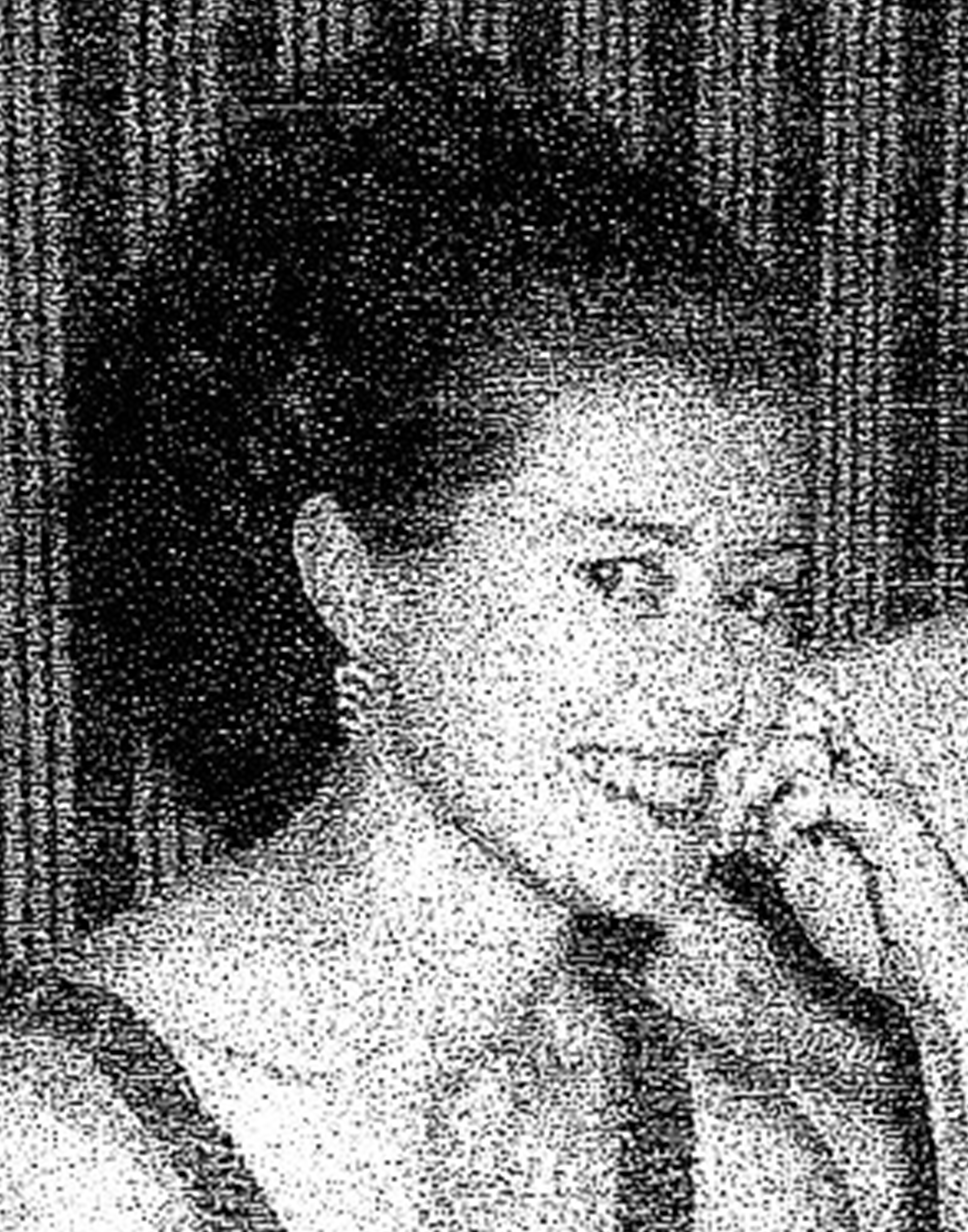
Hazel VIDLER was last seen around 1979-1980 in the Upper Lansdowne/Taree area NSW. Hazel would have been around 57 when she went missing.
She has not been in communication with family or friends since. Hazel is described as 160 – 170cm tall, Caucasian, light brown hair, thin build and hazel coloured eyes.
Anyone with information which may assist in locating the whereabouts of Hazel is urged to call Crime Stoppers on 1800 333 000.
CORONERS COURT OF NEW SOUTH WALES
I find on the balance of probabilities that Hazel Clare Vidler is now deceased and that she died sometime in or after 1979. However, the available evidence does not allow for any finding to be made as to where she died or the cause and manner of her death.
Recommendations: FINDINGS
Introduction
1 To the Commissioner of the New South Wales Police Force (NSWPF): That the investigation into the death of Hazel Clare Vidler be referred to the Manning Great Lakes Police District for monitoring and also to the Missing Persons Registry, State Crime Command, to monitor as per their protocols. Hazel Clare Knight was born on 23 October 1922 and lived in Sydney, NSW. Throughout her life Hazel was known by several different names including Hazel, Clair, and Clare with the surnames Knight, Draper, Ritzau, Carson and Vidler. For the purposes of this matter, she will be referred to as Hazel. The police investigation which ensued has not uncovered reliable evidence as to Hazel’s whereabouts or what happened to her from approximately 1979.
Why was in inquest held?
Hazel’s whereabout has not been ascertained despite extensive police investigation. When the case of a missing person suspected to have died is reported to a coroner, the coroner must determine from the available evidence whether that person has in fact died. Despite extensive enquiries, there will often be very little information about what happened to the person after they were last seen alive. 2
4 If a coroner forms the view that a missing person has died then the coroner has an obligation to make findings in order to answer questions about the identity of the person who died, when and where they died, and the cause and the manner of their death. The manner of a person’s death means the circumstances in which that person died. If the coroner is unable to answer these questions, then an inquest must be held pursuant to section 27 of the Coroners Act 2009 (NSW) (the Act).
5 In this context it should be recognised at the outset that the operation of the Act and the coronial process in general represents an intrusion by the State into what is usually one of the most traumatic events in the lives of family members who have reported a loved one missing. At such times, it is reasonably expected that families will wish to attempt to cope with the consequences of such a traumatic event in private. The sense of loss experienced by family members does not diminish significantly over time. I acknowledge that both the coronial process and an inquest by their very nature unfortunately compel a family to re-live distressing memories and to do so in a public forum.
The evidence
6 A brief of evidence prepared by Detective Senior Constable Belinda Johnson, the Officer in Charge (OIC), was tendered to the Court and marked Exhibit 1. DSC Johnson also gave oral evidence at the inquest.
Hazel’s Life
7 As stated above throughout her life Hazel was known by several different names including Hazel, Clair, and Clare with the surnames Knight, Draper, Ritzau, Carson and Vidler. Many of the statements contained in the brief of evidence are from people who knew Hazel as Claire Vidler, and Edward Vidler as “Jim”. Again, for clarity and consistency, I will use their legal names Hazel and Edward. 3
8 Hazel married to Milton Draper in 1941 and she gave birth to her only child, Christopher Draper, in June 1941. Hazel and Milton separated and divorced in 1951. In 1953, Hazel married Carl Riztau. They lived together with Christopher in Bondi Junction before divorcing in 1954. At the time Hazel was known by her stage name, Claire Carson, and was a choreographer and dancer in Kings Cross. Chrisopher lived with Hazel until he was 17 when he moved away for work, later joining the Airforce when he turned 18.
9 10 Although there is tragically little known about the details of her life, what was common across all the statements from people who knew Hazel were their impressions of her as an extremely independent and fashionable woman. As well as having worked as a dancer and choreographer in Kings Cross, Hazel had also worked as an advertising executive at George Patterson Advertising Agencies. Her son Chrisopher remembers his mother as a woman who always wore the right thing at the right time, who looked like she had stepped out of a Vogue magazine when she went out. Hazel would always have her hair and nails done, and loved horse-riding, dancing and going to nightclubs until arthritis meant she had to stop many of the hobbies she loved. Hazel had distinctive scar that ran from the top of her stomach to her pubic area which is believed to have been the result of a major surgery, possibly a hysterectomy performed at the now closed Paddington Women’s Hospital. Despite extensive enquiries, the officer in charge was unable to locate any medical records relating to the procedure.
Relationship with Edward James Vidler
11 Hazel is believed to have first met Edward Vidler when she was living at Unit 1/41 Burwood Road in Burwood, NSW, above Leoni’s Dress Shop. Edward Vidler told police they met at a party at Hazel’s unit as his brother had been living in unit 2 of the same building. Hazel and Edward married on 4 September 1964 in Burwood when Edward was 21 years old, and Hazel was 41. Edward’s address listed on their marriage certificate was unit 2/41 Burwood Road. 4
12 Although Christopher didn’t see his mother often as he was busy with the Airforce, he would always receive Christmas and Birthday cards from her. He knew they were from her as he recognised her handwriting, and she was quite fanatical about always having cards on hand to send him. Christopher recalled that around 1979 or 1980, the cards stopped arriving. He found this strange as up until then, his mother had sent them without fail. NSW Land and Registry Services Records
13 Records from the NSW Land and Registry Services show that Edward and Hazel owned three properties at different times between September 1972 and 24 June 1983, those properties being:
• 24 Hunter Street, Blacktown – Edward James Vidler and Claire Vidler are listed as being joint tenants between 20 September 1972 to 15 November 1977;
• 3 Little Run Road, Wherrol Flat - Edward James Vidler and Claire Vidler are listed as being joint tenants between 25 November 1975 to 17 July 1978, after which the property was sold to Edward’s brother, Richard Vidler, and his wife Mavis Evelyn Vidler.
• 95 Putta Road, Upper Lansdowne - Edward James Vidler and Claire Vidler are listed as being joint tenants between 22 August 1977 and 24 June 1983.
I note that there is no knowledge of Hazel’s whereabouts from approximately 1979.
14 These records correspond with Edward’s memory of where they were living at the time Hazel is said to have disappeared. Edward refers to the property at Lot 10 of 95 Putta Road as being in Taree, which was the closest major town to Upper Lansdown. The lot was 100 acres with no structures when they bought it. Edward said that he put a shed on it and concreted the floors, and they lived in the shed. He was working at International Harvesters McCormich at Taree Airport at the time.
15 On 21 January 1981, Edward’s mother lodged a caveat over the property at 95 Putta Road to entitle her to erect improvements on the land, and to retain, occupy and remove the improvements at any time. It listed the registered proprietors as Edward and Claire Vidler, with Claire’s address listed as “whereabouts are now unknown”. That caveat was cancelled by request on 22 June 1982.
Mrs Hazel Vidler’s last known movements
16 17 There is conflicting information regarding Hazel’s last known movements, although all reports come from the same source, being Hazel’s husband at the time of her disappearance, Edward Vidler. In summary the various versions given by Edward include:
• When interviewed by police Edward told police that Hazel had said she did not want to live in Taree any longer, that he drove her into town to catch a bus, and that the bus left while he was parking the car. Edward told police that he then reported Hazel as missing;
• Edward told Hazel’s son that he didn’t know what had happened to Hazel, but that he had last seen her in Taree. Although the details Edward gave Christopher were inconsistent at times. At one point Edward said that Hazel had left with a duffle bag and had been going to town to get some stuff to put in it, but then said Hazel must have jumped on a train and headed to Sydney. Edward told Christopher that he had reported Hazel missing;
• Edward told his second wife, Jeanette, that he drove Hazel into town, and as he parked the car in Victoria Street, Taree, Hazel ran away towards the Motel near the bridge in town. Edward said he went to the police to report her missing the following day, and that he thought Hazel had run away with someone. Jeanette also recalled a conversation she had with Edward while they were living at the property at Putta Road address where he said “You could put a body down the bush and the wild pigs would eat it and there would be nothing 6 left.” Janette asked, “What about a skeleton?”, to which Edward replied, “No, they digest everything.”
18 Each of these are explored in more detail below.
Circumstances of Hazel’s Disappearance
19 20 21 When interviewed by police in 2022, Edward told the investigators that about a month before she disappeared, Hazel told him she didn’t want to live in Taree and wanted to go back to the city. In Edward’s mind, the relationship had ended. He claimed there was a discussion about selling the property if Hazel didn’t want it, with Edward saying he would let her know through Christopher’s father, Milton Draper who owned Miranda Glazing Works. During the interview, Edward couldn’t recall precise dates but was able to provide a version of events of the day he said Hazel disappeared. He remembered he drove Hazel into Taree in his green Morris Nomad so she could catch a bus. She didn’t tell him where she was going and didn’t talk to him on the ride into town. Hazel had a small overnight bag with her, but nothing else. Edward said that he dropped her off as there was no parking at the bus stop. Edward said that in the ten minutes it took for him to find a parking spot, the bus was gone and so was she. He enquired with a person at the bus stop, and was told the bus had been and gone. That was the last he ever saw of her. Edward says he went home and stayed by the phone in case Hazel tried to ring. That he called people who knew Hazel including her family members, but no one had heard from her. Edward said he attended Taree Police Station to report Hazel as missing or “skipping off” in the day or two after she left. But that the police officers said they couldn’t list her as a missing person at the time, but to come back if she didn’t show up in a certain time. The day following the disappearance, Edward says he drove down to visit Hazel’s aunt, Dorothy Jedes, who lived in Ashfield. He stayed with her for a week and renovated her garage during which time no one had heard from Hazel. At some time after this, 7 Edward claims to have returned to Taree Police Station to tell them Hazel still hadn’t returned but says he never heard anything from them.
22 When the investigators asked Edward if he knew what happened to Hazel, he said, “No idea. She disappeared out of my life and haven’t heard from her and thank God for that.” When asked why he said, ‘thank God’, Edward responded, “Because she was a bloody expensive commodity.”
Dissolution of Marriage
23 24 25 26 An application for the dissolution of the marriage between Edward and Hazel was heard at the Family Court of Australia in Sydney on 29 May 1980, and was made final on 30 June 1980. Given the operation of section 48 of the Family Law Act 1975 (Cth), an order for the dissolution of marriage could only be made if the court was satisfied the parties has been separated for a continuous period of not less than 12 months immediately preceding the date of filing the application. Unfortunately, the date of filing and the grounds Edward relied on for his application do not form part of the archived documents. However, Edward would have had to tell the Court the twelve-month period of separation commenced prior to 29 May 1979, at the very latest. From my reading of this contemporaneous and independent information, that is, the records from the Family Court, I find two alternative lines of thought to be available. The first being, Hazel left Edward of her own free will, and did not make contact with Edward, her son Christopher and/or any known friends or relatives since that time. In this line of thought, Edward would have waited to required 12 months and then applied for a divorce. The second line of reasoning, Edward knew that Hazel had died, and that she would not be able to dispute his claim that their marriage had been separated for 12 months, and as such he applied for a divorce. Either way, the court finds that as of 29 May 1980 Hazel was not involved in her divorce proceedings.
27 In his I note that Edward later sold the property that they held together. interview with police Edward said that he would forward the relevant proceeds of the sale to Hazel through her son’s father, however there was no evidence given to suggest that he took steps to do so. It appears as thought this line of questioning was not pursued. In stating this the court notes that this is understandable due to the lapse in time and limited opportunity for police to question Edward. Edward’s attendance at Church Lane, Rosewood, Qld
28 29 Around 1962, Christopher married Beverly (Bev) Cartwright in Miranda, NSW. Christopher provided a statement to police in 2021 when the missing person investigation was formally opened. He recalled in 1980 he and Bev were living in a house on Church Lane in Rosewood, Queensland. Bev’s sister, Janette McGuire, who was also known as ‘Elaine’ had moved to Queensland from Sydney in 1973 and was often at the house in Rosewood helping to look after their children. Chrisopher remembers that about a year after the Birthday and Christmas cards stopped, Edward turned up to the house on Church Lane with some of Hazel’s property. Edward told him he didn’t know what had happened to Hazel, but that he had last seen her in Taree. Although the details Edward gave Christopher were inconsistent at times. At one point Edward said that Hazel had left with a duffle bag and had been going to town to get some stuff to put in it, but then said Hazel must have jumped on a train and headed to Sydney.
Marriage to Janette McGuire
30 Bev’s sister, Janette McGuire, provided a statement to police in 2023, she was 83 years old at the time. Janette had first met Hazel and Edward in 1963 or 1964, about a year after her sister married Christopher. But she had known Edward’s parents prior to that as she had rented a property off them in St Mary’s. When Edward turned up to Bev’s house in Church Lane, it was the first time Janette had seen him since he was living with Hazel in Burwood. Jeanette told police that Edward was asking about Hazel, and told them that he thought she may have gone to Queensland to live with Christopher.
31 32 33 34 Janette recalls Edward telling her that he drove Hazel into town, and as he parked the car in Victoria Street, Taree, Hazel ran away towards the Motel near the bridge in town. Edward said he went to the police to report her missing the following day. Janette thought it was strange to report Hazel as missing if she ran away. Edward had also told Janette he thought Hazel ran away with someone, which Janette also found odd as by that time Hazel was an older lady, and it didn’t seem like something she would have done. Edward remained at the house in Church Lane for about a week before returning to NSW. Edward and Janette remained in contact via phone conversations after he left Queensland. About a year later, Edward moved into Janette’s house in Queensland, and they were married in the early 1980s. When Edward spoke about this in his interview in 2022, he told police he had moved to a house at 32 Railway Street in Rosewood and rented from some friends. He later confirmed that this was Janette’s house, although stipulated they were only friends at this point. Janette distinctly remembered a conversation she had with Edward before they got married. She had moved in with Edward at the Putta Road address for about four or five months. At that point the property still only had a garage type structure that had been converted to be somewhat habitable house. There was a second shed which Edward’s mother and father lived in. One day when Edward and Janette were at the house, Edward said to Janette “You could put a body down the bush and the wild pigs would eat it and there would be nothing left.” Janette asked, “What about a skeleton?”, to which Edward replied, “No, they digest everything.” Janette had heard the wild pigs at night but never seen them and she knew Edward had kept a couple of pigs in a pen at the time. She also knew Edward and his father had firearms, but she had never seen them as she didn’t like guns.
35 Janette left the Putta Road address and moved back to Queensland sometime later, after which she and Edward got married. They lived in a house on Mill Street, Rosewood with Janette’s biological and stepchildren from her previous marriage. Janette sold the Mill Street house at Edward’s request, and they bought a 40-acre block in Grandchester, Queensland. Janette never knew what happened to the money from the sale of the Putta Road property as they did not share a bank account.
36 37 38 In 1986, Edward and Janette separated. Janette’s description of Edward was not favourable. She described him as secretive, and she would often not know where he was. Janette believed Edward was having an affair with a woman in town, but by that point she didn’t care. She was grateful for a reason to leave the marriage. Jeanette also told police that if Edward wanted sexual intercourse, he would take it, no matter what she was thinking, and she referred to Edward ‘trying to rough her up’ for sex. After they separated, Janette suspected Edward was following her going to work and watching what she was doing. Janette told police she was always doubtful about what had happened to Hazel. Edward would often make comments about Lansdowne, and it would make Janette think about Hazel and what had happened to her. Although she had no hard evidence, she thought Hazel’s body was likely still out at Lansdowne, either in the forest or on the 100-acre block. Janette didn’t believe that Hazel would leave her grandson and son and not maintain contact.
Marriage to Valorie Budworth
39 Edward became friends with Valorie Budworth when he was working at a mechanic diesel fitting business in Brisbane. Valorie was married to a work colleague of Edward’s. In 1989, Valorie took her children and left her marriage with Edward’s help. Sometime later they began a relationship, and were married with two children of their own.
40 Valorie provided a statement to police in 2023 when she was 60 years of age. Valorie told police their relationship had been going well, up until she unexpectedly fell pregnant with their son. This is when Valorie noticed Edward’s behaviour toward her and her oldest son, who was Edward’s stepson, changed.
41 42 43 44 Valorie described Edward’s behaviour towards her as obsessive. He would follow her to her friends’ houses and turn up unannounced and would even find her if she was shopping in the city. Initially Valorie attributed the behaviour to insecurity, as Edward was nineteen years older than her. But the ongoing obsession and stalking caused problems in their marriage. Valorie threatened to leave Edward several times, but he would just laugh at her. Towards the end of their marriage, Valorie found a letter hidden inside a book on the bedside table. The letter was addressed to ‘Jim’ and from Elaine (which was the name Janette went by). It contained allegations of inappropriate behaviour towards children. Edward confirmed that the letter was from his exwife before taking the book and letter. Edward had never told Valorie that he had been married to Janette. She was aware Edward had been married before Janette but had never told Valorie the name of his ex-wife, and she had not wanted to know. The marriage ended not long after this, when Valorie kicked Edward out of the house. Whilst Valorie’s statement provides valuable insight into Edward’s personality and behaviours, she knew very little about Edward’s past and he had not told her anything about Hazel’s disappearance. Both Janette and Valorie’s statements contained information relating to inappropriate behaviour towards women and children. Unfortunately, Edward died before investigators could put these allegations to him.
Hazel reported as missing to the Police
45 In the days and years that followed Hazel’s disappearance, she never contacted her son or grandchildren. There were no more Birthday or Christmas cards sent, and no one knew where she had gone.
46 47 48 In 1983, Christopher made enquiries with Births, Deaths and Marriages and received a certificate stating there were no records relating to his mother. The years went on and eventually Christopher’s children pushed him to look into his mother’s disappearance. On 22 July 2021, he attended Queanbeyan Police Station to find out what information was available about the missing person’s report that Edward had claimed to have made. It was at this time Christopher was informed that there was no record of a missing person report being made about his mother. A report was formally taken and given the suspicion surrounding the circumstances of Hazel’s disappearance, Strike Force Koradji was established. Despite extensive efforts to discover evidence of what happened to Hazel, much of the information that would have been available in 1979 had since been lost to time. With the death of Edward Vidler, police lost the opportunity to question him further and all avenues of investigation were exhausted. Detective Belinda Johnson who is the officer in charge has compiled a brief of evidence, tendered as an exhibit in the proceedings, contains statements and interviews with people who knew Hazel during her life, as well as all the documentary evidence that could be retrieved. Whilst Detective Johnson was the only witness called in the inquest, the brevity of the inquest does not reflect the comprehensive investigation that was conducted into Hazel’s disappearance.
Is Hazel now deceased?
49 A finding that a person is deceased is a finding of great significance and gravity, not only for the family members of that person and the emotional toll that such a finding will invariably bring, but also because such a finding carries with it important legal and administrative consequences. Such a finding is made on the balance of probabilities, but there must be clear, cogent and exact evidence that a person has died before it can be made Briginshaw v Briginshaw (1938) 60 CLR 336.
50 51 52 53 54 The evidence summarised below which was gathered during the course of the investigation into Hazel’s disappearance supports the contention that Hazel died in or after 1979. Despite Hazel consistently sending birthday and Christmas cards to her son Christopher for many years, Christopher has not received any such cards since approximately 1979 or 1980. I note that in Christopher was born on 19 June 1941, and in 1979 he would have turned 38 years of age. This is to indicate that this would not be an expected or usual age to stop cards to your adult son, such as, for example, age 18 or 21. The evidence summarised below which was gathered during the course of the investigation into Hazel’s disappearance supports the contention that Hazel died in or after 1979. Despite Hazel consistently sending birthday and Christmas cards to her son Christopher for many years, Christopher has not received any such cards since approximately 1979 or 1980. I note that in Christopher was born on 19 June 1941, and in 1979 he would have turned 38 years of age. This is to indicate that this would not be an expected or usual age to stop cards to your adult son, such as, for example, age 18 or 21. There has then been no contact between Hazel and her son, or grandchildren since that time. In addition, there has been no known or reported contact between Hazel and any third party, including her then husband Edward, since that time. Hazel was born on 23 October 1922, and if she were alive today she would be 103 years old. To date, Enquiries have been conducted using the following surnames: VIDLER, CARSON, RITZAU, DRAPER, KNIGHT along with the first names being Clair, Clare or Hazel. Enquiries that have been conducted surrounding the missing person include the following.
• - Banking information - No accounts identified
• - Historic NSW Police and Court information
• - Passport information - No records held
• - Centrelink/Medicare - No records held
• - NSW Police archives - No records held
• - Land registry services - three properties purchased by the missing person and Edward Vidler.
• - National births deaths and marriages enquiries - All databases searched with no result.
55 56 A request for information was sent to the Health Information Officer for Prince of Wales Hospital/Royal Hospital for women to obtain any further information surrounding a possible operation on the missing person around 1952. A reply was received on 20 March 2024 indicating a search was conducted on both the 'current and deprecated databases' and failed to locate any match to the missing person. I am satisfied on the available evidence that Hazel is deceased.
When and where did Hazel die?
57 58 59 Having concluded that Hazel is deceased, as part of the coronial jurisdiction I am to determine whether the available evidence allows for a finding to be made as to where and when Hazel died, and the cause and manner of her death. As noted above, the last reported and reliable record of contact with Hazel was in 1979 or 1980 with her son Christopher. Hazel’s ex-husband Edward has given various versions of his last contact with Hazel, set out above. Due to the contradictory nature of the versions given by Edward, I determine that they cannot be relied upon. I also note that serious allegations have been made against Edward, regarding his treatment of both male and female children and women, however Edward passed away before these could be fully investigated by police. These included allegations of sexual violence made by Edward’s second wife. She also reported him stating that a human body could be digested by pigs at the address in Putta Road. This indicates that Edward had believed that this was possible.
60 61 62 63 Edward’s third wife also reported actions by Edward that would easily fall into the category of domestic violence today. That is, allegations that Edward he stalked and followed her. One piece of evidence that works in Edward’s favour, is that his later wife reported that he travelled to Queensland after Hazel’s death and inquired about Hazel’s whereabouts. It seems unlikely that he would do this if he knew that Hazel was deceased, although at the same time, I acknowledge that this may have been part of a broader plan to support his own version of events. However, having assessed the evidence overall, while I have significant suspicions regarding any role that Edward may have played in the disappearance and/or subsequent death of Hazel, on the evidence before me I am unable to make a positive determination that Edward ended Hazel’s life. In addition, as Hazel has not been found, the available evidence does not enable me to find the place of Hazel’s death.
What caused Hazel’s death?
64 As Hazel has not been found, the available evidence does not enable me to find the cause of Hazel’s death.
What were the circumstances (manner) in which Hazel died?
65 On the available evidence it appears likely that in approximately 1979 to 1980 Hazel died. There is no evidence on which I could base a finding as to what happened thereafter. As such, I am unable to make a finding in relation to manner of death.
Is it necessary or appropriate to make any recommendations?
66 It is appropriate to ensure that if Hazel’s remains are located at some time in the future they can be appropriately identified and his family notified. To that end, I make the following recommendation to the Commissioner of the NSWPF: That the investigation into the death of Hazel Vidler be referred to the Manning Great Lakes Police District for monitoring and also to the Missing Persons Registry, State Crime Command, to monitor as per their protocols.
Concluding remarks
67 The findings that I make under s 81(1) of the Act are:
Identity The person who died was Hazel Vidler.
Date of death Hazel Vidler died in 1979 or later.
Place of death The available evidence does not allow for any finding to be made as to the place of Hazel Vidler’s death.
Cause of death The available evidence does not allow for any finding to be made as to the cause of death.
Manner of death The available evidence does not allow for any finding to be made as to the manner of death.
68 69 70 I thank DSC Johnson for her work in the coronial investigation and for preparing the brief of evidence. I also thank Amanda Chytra of the Police Advocates for his assistance in this inquest. On behalf of myself and the Coroner’s Court of NSW, I express my sincere condolences to Hazel’s family and friends for the tragic loss of Hazel in circumstances which remain uncertain.
I close this inquest.
Magistrate G Towney
Coroner Forster