These days, not a lot remains of the town of
Dalmorton. Located on the Boyd River in
northern New South Wales, Australia on the
traditional lands of the Gumbaynggirr
peoples, Dalmorton came into being during a
gold rush in the 1860s. At its peak it
hosted up to 5,000 residents who were served
by no less than thirteen pubs. Mining
activity continued even after the gold rush
subsided, supplemented by timber milling for
the hoop pine that grew in the valley, and
the town’s position on the road between the
larger towns of Grafton and Glen Innes
guaranteed it some traffic.
However, as the twentieth century
progressed, Dalmorton was bypassed following
the construction of the Gwydir Highway
between Grafton and Glen Innes. Slowly its
essential services closed, and by 1966 there
was no longer a police station, post office
or general store in the town. Today,
Dalmorton is only reachable by dirt road.
Only a few buildings and the cemetery
remain, and a litany of abandoned mineshafts
that speckle the nearby hills bear testament
to the town’s gold rush origins. A popular
campsite near the town is managed by the
National Park Service, and the area attracts
visitors who enjoy the gold fossicking and
bushwalking opportunities that the area has
to offer.
In April of 2003, one such visitor was on a
bushwalk near Dalmorton when they noticed a
car abandoned in the scrub. They reported
the car to police, setting the scene for a
missing persons case which is as bizarre as
it is little-known. This post details the
mystery of “John Ray Green”, a man with the
rare distinction of simultaneously being
both a missing person and unidentified.
The Car in the Scrub
On 15 April 2003, a bushwalker was hiking in
the area of Jackass Creek outside Dalmorton.
The walker noticed a blue 1990 Holden Apollo
car abandoned in the scrub and notified
police, whose enquiries established that the
vehicle had been there for at least two
weeks. Contemporary media coverage describes
the location of the car’s discovery as ‘very
isolated’, making it likely that it was some
distance away from the area’s main
thoroughfare, the Old Glen Innes road.
Indeed, although this road crosses a
waterway called Jackass Creek, the goldfield
by this name is located a couple of
kilometres north of Dalmorton in remote hill
country. This area is reachable only by
poor-quality tracks and would have been
seldom frequented by others.
Police traced this vehicle to one John Ray
Green, age 71, of Urunga, NSW, a coastal
town more than three hours’ drive away from
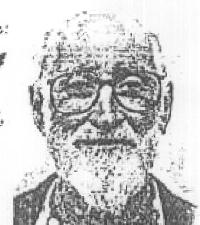
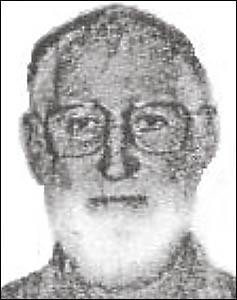
where the car was found. Photos of John are linked
here: he was of European appearance,
around 170cm tall with a thin build, grey
hair, a moustache, and a full beard. He was
described as a gold prospector who enjoyed
the outdoors and went camping frequently.
Given how many old gold mineshafts there
were around the area of John’s
disappearance, it was immediately suspected
that something had happened to him while he
was prospecting. While extensive search
efforts failed to find John’s body, it is
believed to this day that he likely died in
the area, possibly after falling down a
disused mine shaft close to where his car
was found.
Sorting Out the Timeline
Police attempted to trace John’s movements
to establish when he went missing. The
official missing persons page for John on
the Australian Federal Police website states
that he was last seen on 15 May 2003 by
neighbours, who stated that he told them he
was going to Sydney to attend a funeral.
This source also states that his car was
found on 15 April 2004.
However, I suspect that these two dates are
incorrect, as they make no sense given the
rest of the information which is available
about the timeline of John’s disappearance.
An ABC article from August 2003 states that
his car was found on 15 April 2003, not
2004. The publication date of this article
tells us that the location of John’s car was
known at least eight months before the date
of discovery stated in the missing persons
case summary.
Furthermore, if the dates in this case
summary are correct and John was last seen
in early May 2003, this would mean that he
somehow made it back to his home hundreds of
kilometres away after abandoning his car in
an extremely remote spot. He would then need
to lie low during investigations about his
whereabouts following the reporting of his
car to police on 15 April, before announcing
his departure to his neighbours and
disappearing for good. A Coffs Coast
Advocate article from August 2006 states
that John had been missing since March of
2003, and I think that this timeline is more
plausible.
Overall, I think it’s most likely that John
was last seen by his neighbours sometime in
March 2003. His car was then noticed in the
bush near Dalmorton around the start of
April, two weeks before it was officially
reported to police on 15 April. Indeed,
police note that “it [d]oes not seem as
though he disappeared from there of his own
free will”.
John’s Life and Personality
John was never formally reported missing by
anyone; he is presumed to have disappeared
based on the discovery of his car and
police’s inability to trace him. Details
about his life are scarce, but based on a
birth certificate found in his home he was
born in 1932, making him 71 at the time of
his disappearance.
It is known that between 1977 to 1990, John
lived in the Sydney suburb of Hurstville,
working as a cleaner for Randwick Council.
He then lived in the central New South Wales
town of Young for some years: this town is
famous for its cherries, and John worked on
Young Fairview Orchard as a cherry tree
pruner until February of 1994. There is a
gap of approximately four years in John’s
known movements, but by 1998 he was living
on the north coast of New South Wales in the
Ballina area, with stints in Evans Head,
Woodburn, and Wardell.
By the time of his disappearance in 2003,
John was living in Urunga, a couple of hours
south of the Ballina area. He was described
by investigating officer Grahame Burke as
“reclusive, polite but unsociable”. When
searched after his appearance, his apartment
contained no personal possessions such as
photos, letters, a diary, or even old
paperwork like tax returns. A search of his
phone records revealed that he had only made
one call in the six months before his
disappearance (the available information is
that this call was placed ‘to a newspaper’).
Police could only uncover one instance of
John volunteering any information about his
family: he told acquaintances about the
death of an aunt, but police weren’t able to
trace her and suspect this story was a
fabrication. (It’s not clear whether there’s
a linkage between this story about the death
of an aunt, and the funeral which John told
neighbours he was travelling to Sydney for
prior to his disappearance.)
Identity Fraud
However, by far the biggest twist that
emerged from the police investigation is
that “John Ray Green” was not the real name
of the missing man. The real John Ray Green
was alive and well in Western Australia, and
he had no idea that this man had been using
his name and identification for nearly three
decades.
Police’s suspicions were first aroused when
a birth certificate located in the man’s
Urunga home ‘did not match his name’. The
exact timeline of the man’s identity fraud
is a little unclear, but from what I can
make out, he began using the name John Green
when he started working for Randwick Council
as a cleaner in 1977. To quote police, he
then “hit the jackpot” in 1990 when via
unknown means, he managed to obtain a copy
of a Western Australian birth certificate
for John Ray Green. He then updated his
personal details to fix any discrepancies
between those he’d previously been
providing, and the ones on the birth
certificate. Reading between the lines, the
references to the birth certificate ‘not
match[ing] his name’ refer to the Randwick
Council employment records from the
1977-1990 period, when the impostor didn’t
have access to all the information needed to
accurately assume the identity of John Ray
Green.
New South Wales police tracked down the real
John Ray Green to the small town of Narrogin
in the Wheatbelt region of Western
Australia, situated a couple of hours
southeast of the state capital of Perth.
Amazingly, Green believed that he recognised
the man from church services in the nearby
town of Brookton some years ago. To quote
Green, who was a Jehovah’s Witness: "I'm
pretty sure I've seen him before. A
scruffy-looking bloke like that tends to
stand out at one of our meetings because we
are a pretty clean-shaven bunch.”
Furthermore, Green claimed that other people
also recognised the man, including Green’s
daughter and a businessman from neighbouring
Pingelly.
Police believe that the man who stole John
Ray Green’s identity is likely to have been
from WA originally, but to date they have
been unable to establish his original
identity or locate any relatives.
Furthermore, there have been no matches to
the identity thief in fingerprint records.
Standstill: Summary and Questions
The last new information I could find about
this case was shared in July of 2006, and
even then the lead investigator (Detective
Senior Constable Grahame Burke) clearly felt
the case was at a “standstill”. After three
years of investigation, he was unable to
present a case to the coroner: not only was
there no body and thus no confirmation of
death, but the identity of the man was not
known. Police continue to appeal for
information from anybody who had dealings
with the man in late 2002. They have also
tried to publicise the case in Sydney and
Western Australia in the hopes that people
who recognised the man would come forward.
However, nearly two decades on from these
final updates, the conundrum of the man
known as “John Ray Green” remains not only
at a standstill, but is now in danger of
being forgotten entirely. Very little
information is freely available about this
case online, so I hope that by sharing what
I have learnt from trawling the newspaper
archives, the true scale of this mystery
will be better known. (As a side note, this
is a tough case to research as search
results get swamped by content about John
Green, the young adult novelist!)
Few individuals have the dual distinction of
being missing persons while also being
unidentified. This case involves a
fascinating twist of fate: if this man had
not gone missing, it is likely that nobody
would ever have discovered his act of
identity theft. However, this combination of
features also presents some unique barriers
to resolving this mystery. In concluding
this write-up, I want to pose a few
questions which are still on my mind, which
I’ll order from least to most mysterious:
-
Did the man die near Dalmorton? If so,
how? To me, this is the least
intriguing part of this case. We really
don’t have any concrete evidence on this
point, but circumstantially, I think it
is most likely that he died while
prospecting for gold. If he fell into an
abandoned mineshaft, he might never be
found: they’re notoriously hard to
search safely, and can spontaneously
collapse which would conceal his remains
permanently. While we can’t definitively
rule out suicide or foul play, Occam’s
razor tells us that death by
misadventure is a perfectly plausible
explanation. On the other hand, I think
the idea of the man intentionally
planning his disappearance and secretly
leaving the Dalmorton area alive is so
implausible and involves so much
difficulty that it can be ruled out.
-
Did the man lie during his last
encounter with neighbours? Given
how little we know about his life and
movements, it’s not clear whether the
man’s story about attending a funeral in
Sydney was true or false. If he could be
connected to a funeral in Sydney, this
would improve the chances of identifying
him. However, he also seems to have been
so secretive that this could have just
been a cover story to explain away his
extended absence on a prospecting trip.
-
Was the man in hiding or on the run? On
several occasions, police stated that
they believed the extent of the man’s
secrecy, lack of personal possessions
and identity fraud meant he was likely
in hiding or on the run from something.
If so, what was this? Was his life
genuinely in danger (giving rise to
possible foul play theories), was he on
the run due to criminal history, or did
he just not want to be found by certain
people from his past? To me, the man’s
pattern of behaviour is equally
explainable by the idea that he was a
recluse who wanted to be untraceable to
family and old acquaintances.
-
What was the man’s real identity? Will
it ever be known? These are
obviously the million-dollar questions
in this case. Some circumstantial signs
seem to point to the man being from
Western Australia or having spent time
there, especially being seen in church
services by (among others) the man whose
identity he stole. However, in the
absence of an identification from
members of the public, it’s hard to
imagine that this case will be solved.
His fingerprints (presumably taken from
his home or his council personnel
records) have not been matched to any on
file, and unless some of his belongings
happen to be stored in evidence, it will
be impossible to do any forensic
genealogy work without his body to
extract a DNA profile from. Even details
such as the man’s age are no longer
certain: while it’s widely reported that
he was born in 1932, this information is
taken from the birth certificate and
therefore may not be accurate.
Sources
AFP Missing Persons Profile
Newspaper Articles (From Archives; Not
Accessible Publicly)
Coffs Coast Advocate - August 25, 2006
 John
Ray GREEN
John
Ray GREEN