 Linda Ann HUMPHRIES
Linda Ann HUMPHRIES
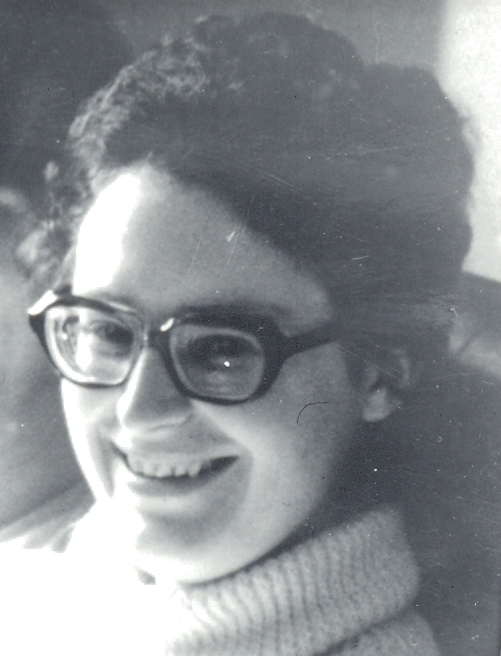
21 year old Linda Humphries was last seen in Griffith, NSW on the morning of 31 October 1975 when she drove her husband to work. She did not meet him for lunch as arranged and has not been seen since. Her vehicle, a yellow Datsun 1200 coupe, was located at Fitzroy Falls on 8 November 1975.
If you have information that may assist police to locate Linda please contact Crime Stoppers on 1800 333 000 or via Crimestoppers.com.au.
TWO women who disappeared from the same spot, five years apart, may be forever linked by a mysterious set of bones buried in an unmarked grave.
THE bodies of two women who disappeared from a popular tourist spot, in separate incidents more than 30 years ago, may have been dumped in an unmarked grave in Sydney’s west.
Human remains found at the base of Fitzroy Falls in the NSW southern highlands in 1984 were thought to have belonged to missing women Linda Humphries and Patricia Trebel.
A 1985 inquest at Moss Vale, which attempted to identify the bones, concluded they could have belonged to either of the women but — this being well before the advent of DNA forensic technology — there was no way of knowing for sure.
Incredibly, instead of being stored as evidence, the bones were disposed of in an unmarked plot along with countless other unidentified bodies, at a cemetery in western Sydney around 1986.
To the dismay of cold case detectives tasked with reinvestigating the 1975 disappearance of Ms Humphries, and the fate of Ms Trebel five years later, the exact location of the burial site is not on record. The bones can never be exhumed and retested for comparison with DNA taken from Ms Humphries’s mother Daphne in 2013.
DNA has not been obtained from Ms Trebel’s family because she has no surviving blood relatives and her two children were adopted.
“Nobody has any idea where the plot is,” Detective Sergeant Scott Wilkinson told news.com.au.
“Even if we could find it and we wanted to exhume the bones for testing, there are so many other remains buried (in the same plot) that we wouldn’t know what we were looking at.”
Ms Humphries and Ms Trebel were last Friday officially declared dead by Deputy State Coroner Paul MacMahon during a joint inquest into their disappearances.
“These two suspected deaths are being heard together because both women are reported to have disappeared from one location, Fitzroy Falls, near Moss Vale NSW — albeit several years apart,” Sgt Luke Johnston, the advocate assisting the coroner, told Glebe Coroner’s Court.
“A further reason why your honour is hearing these two inquests together is because there is a possibility that skeletal remains located at the base of the falls in 1984 may be those of either, or even both, women.
“However ... those remains have not been positively identified and will probably never be, given that they are now buried in an unknown plot at Emu Plains Cemetery.”
Mr MacMahon agreed, delivering two open findings at the end of a two-hour hearing.
While he was certain both Ms Humphries and Ms Trebel were dead, he had been unable to determine how they came to be so and by whose hand.
“What happened to them (each of the women) is a matter of speculation and is likely to continue to remain so,” he said.
Don Mackay’s informant named
The mafia thought it had a rat in its ranks who tipped off
the campaigner. It was wrong
TOM GILLING Griffith Free Local News
15 January 2019
For more than four decades it has remained a mystery: who
told Don Mackay about the Griffith mafia’s huge marijuana crops?
On November 10, 1975, the day before the dismissal of Gough
Whitlam’s Labor government, police acting on a tip-off from Mackay entered a
property at Coleambally, 60km from Griffith, and discovered what was then
the biggest marijuana plantation found in NSW. They arrested three men.
Worse, for the mafia godfathers who had planned and financed the crop, they
seized $50 million worth of marijuana.
Many suspected a mafia rat had given Mackay, an anti-drugs
campaigner and aspiring politician, the information.
According to Terry Jones, then editor of The Area News in
Griffith, the godfathers — among them “Aussie Bob” Trimbole and local
winemaker Antonio “Winery Tony” Sergi — believed it too, especially after
police foundanother crop at nearby Euston. Two-thirds of the Euston crop had
been harvested by the time police arrived but it was another financial hit
bitterly resented by the ’Ndrangheta, or Calabrian mafia.
“After the Coleambally raid, Trimbole thought there was a
snitch,” says Jones. “That was the trigger for him to call a meeting where
they decided to have Don killed.” Mackay’s increasingly outspoken attacks
against the drug growers made him an obvious target for retribution, he
says,
but the lesson also would have been meant for the unknown
’Ndrangheta rat suspected of having given him the information. Since the
morning of Saturday, July 16, 1977, when he picked up the phone to hear his
friend Mackay had been shot, and probably murdered, in the carpark of the
Griffith Hotel, Jones has been chasing down clues to the killing. As a
prominent citizen in town, he was on speaking terms with the godfathers who
ordered Mackay’s killing and with local detectives who turned a blind eye.
He reported on the bodies of mafia snitches pulled out of the river. Like
everyone with an interest in one of Australia’s most notorious murders, he
was disappointed, if not surprised, by last week’s news that Mackay’s
killer, hitman James Frederick Bazley, had taken his secrets to the grave.
Bazley would not have known who told Mackay about the Coleambally crop, but
Jones does, and he now has spoken about it for the first time. Mackay’s
source was not an ’Ndrangheta snitch but a local agricultural pilot.
“A young woman, Linda Humphries, went missing two weeks
before the Coleambally drug bust,” Jones tells Inquirer. “She had just got
married and it was thought she might have stumbled on a drug crop while
driving around looking for work. Police found her car and asked local crop
dusters to keep an eye out for Linda. Jimmy Darbyshire was searching for
Linda when he flew over the Coleambally plantation. Jim knew what he was
looking at and told Don. It’s possible he may even have taken Don for a
flight.”
Since then, the identity of Mackay’s informant has been known
only among a “very close circle” of friends of the Mackay and Darbyshire
families, all of whom kept it secret out of fear of reprisals against Jim
and his wife, Pat. Now that both Darbyshires are dead, Jones has decided it
is time to break his silence. “The awful thing is that part of the reason
the mafia wanted Don killed is because they feared having a rat in their
ranks. You’ve got to remember that while the Coleambally trial was going on,
the police found a big cannabis crop at Euston. They thought Don might have
given that up, too, but he didn’t. If they had known about Jim, they might
have taken him out rather than Don.” Jones’s revelations come as civic
leaders struggle to play down the town’s mafia links, with Griffith mayor
John Dal Broi saying the people of Griffith would like “closure on this
terrible blot on the community” and declaring “a new generation has emerged
since Don was murdered”. But Jones points to evidence cannabis growing is
still big business in Griffith. In November 2015 two local men, Pasquale
Sergi, 50, and Saverio Ciampa, 52, were jailed for involvement in a cannabis
crop at Crowther, north of Young, worth about $5.5m. Another Griffith man,
Marcello Casella, whose family’s winemaking business, Casella Family Brands,
has been valued at $1.5 billion, pleaded guilty to knowingly concealing a
serious indictable offence by failing to tell police about the Crowther
crop, despite having visited the property three times. Casella, who is
appealing his six-month jail sentence, had previously been sentenced to five
years’ jail for a $57m cannabis crop in Queensland.
In another case with Griffith connections, former public
servant David Eastman has pleaded not guilty in the ACT Supreme Court to the
1989 murder of Australian Federal Police assistant commissioner Colin
Winchester.
In 1981, Winchester, then a superintendent, sanctioned a
cannabis plantation at Bungendore in NSW, ostensibly for the purpose of
getting information linked to Mackay’s murder. After being stopped with more
than 90kg of Bungendore marijuana in his car, Gianfranco Tizzoni rolled over
to police and told them Bazley had murdered Mackay on the orders of the
Griffith mob.
Jones says he believes Mackay’s body was thrown in the Murray
River and will never be found, but he has not given up hope that one day the
truth about his friend will be known.
EVAN WHITT0N http://netk.net.au/Whitton/Worms5.asp
'Mackay received a telephone call at his business from a man claiming to be "Mr. Adams".'
- John Nagle, QC
For a town with a population of only 3000, the town of Plati, in a province, Calabria, in the toe of the Italian boot, is quite famous. It is the headquarters of L'0norata Societa (The Honoured Society), or, in the Calabrese dialect, N'Dranghita. This is not to be confused with other Italian organisations, the Mafia from Sicily, or the Camorra, from Naples.
Plati has also made a significant contribution to Australian culture: in the five years from 1974 to 1978, people born there were involved in at least twenty cannabis plantations, with a then wholesale value of some $102 million, in all mainland States except Victoria.
Elements of N'Dranghita first arrived in Australia in 1928, in the first, or pre-war, wave of Italian migrants to Griffith, in the Riverina, some 600 kilometres south-west of Sydney. A second wave of Italian migrants came after the war. By 1979, Griffith's population was 13 000. Another 7000 were on 1750 irrigated farms in surrounding Wade Shire. A little more than half the 20 000 people in the area are estimated to be of Italian extraction. Of the post-war migrants, the largest group came from Calabria, and a substantial proportion of those came from Plati.
There is a view that a breakaway and independent element of N'Dranghita, known as The Family (La Famiglia), had cells at Griffith, Melbourne, and in the western suburbs of Sydney, some 25 kilometres from the GPO. Sydney members appeared to be concentrated in a 10-kilometre pocket on the Hume Highway from Fairfield through Cabramatta and Liverpool to Casula.
At a committal hearing in Melbourne in September 1984, Crown Prosecutor Robert Redlich, 38, said Gianfranco Tizzone had known Robert Trimbole from the 1960s. Redlich sad: 'Evidence will disclose that Robert Trimbole was related to a number of families who, it will be shown, participated in La Famiglia and were responsible for the cultivation and distribution of Indian hemp.' A distribution network had been set up whereby a truck loaded with marijuana would be brought by members of La Famiglia from NSW to Victoria, taken to a safe house, and unloaded, and the sale money sent to the organisation. He said that between 1971 and 1980 Tizzone had remitted more than $1.5 million to La Famiglia.
In those years, recently acquired wealth enabled a number of people with connections in Plati, Calabria, to erect 'grass' castles, described by Nagle as 'lavish in the extreme', in Griffith and elsewhere or to buy expensive farms in the area. Justice Woodward noted these during his 1977-79 Royal Commission, but Crown Law authorities apparently judged that charges of 'goods in custody' (i.e. goods for which no satisfactory explanation could be given and thus deemed the product of unlawful activity) would not lie.
In October 1975, Donald Bruce Mackay, owner of a Griffith furniture business, got a letter detailing how to find a large crop of marijuana in the Coleambally Irrigation Area south of Griffith. He made contact with Sydney Drug Squad and some members met him secretly out of Griffith. On 31 October a recently married girl, Linda Humphries, of Griffith, drove her husband to work, and intended driving the 68 kilometres to Coleambally to apply for a job. She was never seen again.
On 10 November, two Sydney Drug Squad officers and an officer from a Country station came to Griffith. Mackay arranged for them to use a four-wheel drive vehicle to get through the rough track and ten or eleven gates to the Coleambally site. Nagle QC later reported: '... on 11 November, a police raid headed by Senior Constable Jenkins, and officer of (the Sydney Drug Squad), was carried out on a property known as "Stevenson's" Coleambally. The police apprehended two men, Guiseppe Agresta and Pasquale Agresta, but some six or seven others were seen to run away from a caravan on the property. A third man, Luigi Pochi, was subsequently apprehended when police searched the marijuana crop..' Those ultimately arrested were G. Agresta, L. Gambacorta, P. Agresta, L. Pochi, F. Sergi. The immature crop was 12.76 hectares and worth up to $80 million dollars. The crop was destroyed and the site sprayed to prevent re-growth. There was evidence of a previous crop or crops already harvested.
In July 1976, Vincenzo Ciccarello acquired and took possession of a property near Euston for $92 000, on behalf of, according to justice Woodward's later finding, Robert Trimbole. According to Justice Woodward: 'On 1 March 1977, a harvest comprising almost two tons of marijuana was located at Domenico Velardi's home at Fairfield. This marijuana was later proved to have been part of the Euston crop.' Woodward described it as 'the largest single seizure of prepared leaf in the State at that time.' Judge John Murray Foord fined Domenico Velardi $5000 and put him on a three-year good behaviour bond on 13 December 1978.
The Euston plantation was raided four days after the Velardi raid, on 5 March 1977. Four were eventually arrested, V. Ciccarello, V. Piscineri, V. and S. Barbaro, one a cousin of previously convicted Griffith grower. The plantation was of 5.86 hectares (14.5 acres), much of it already harvested.
The Coleambally trial proceeded on 6-7 March. Woodward reported: 'It is beyond dispute that during the Coleambally trial a police diary, containing Mr Mackay's name and the nature of the information which he supplied to Drug Squad officers, was made available to defence counsel by the presiding judge (Newton), in the face of a protest by the detective in charge that it did contain this sort of information; a protest that was again pressed when the officer observed some members of the defence reading pages of the diary at random. It is perfectly proper for the trial judge to direct that such a diary be made available to the defence but it was unfortunate that all but the pages relating to the discovery of the crop and the arrest of the accused were not sealed. This is practice which is frequently followed to prevent the very thing which, it is said, could have happened there. This is not to suggest either that some counsel or solicitor for an accused did see Mackay's name. Detective Jenkins, the author of the diary and a witness at the trial, concedes that he does not know this to be so and only infers that it was possible. Nor is it suggested that if this did happen, that the information was passed, accidentally or otherwise, to an accused or anyone else. After all, it is a fact that some of Mackay's confidants were aware of it.'
Nagle QC reported: 'The jury found four of the men guilty and they were sentenced to terms of imprisonment ranging from two to five years, but failed to agree as to Francesco Sergi, who was ordered by the judge to face a new trial.'
By March 1977 there had thus been problems with marijuana cultivation in the Riverina, district. Redlich said: 'Someone such as Donald Mackay, who you will hear, was campaigning strongly against the use of marijuana, posed an extremely significant threat to The Family. As a result of (Mackay's) activities there was a disruption in the supply of marijuana from NSW to Melbourne's outlets.
Nagle QC reported: 'On 1 June 1983, Tizzone made a seventeen-page statement to Victoria Police. In it, he said that he had been present at a meeting in 1977 at Griffith with Tony Sergi, Tony Barbaro and Robert Trimbole, at which Mackay and the difficulties created by his anti-drug crusade were discussed. At this meeting, three possible alternatives were mentioned as a means of ending Mackay's harassment of their business: the first was to buy his silence, the second to compromise him with a woman, and the third, to murder him. Two days later, on 3 June 1983, Tizzone retracted this part of his statement and confined his remarks to an agreement reached in Melbourne between himself and George Joseph, a Melbourne gun dealer and the "hit man," Bazley, to kill Mackay. The agreement to kill Mackay originated from an earlier request by Robert Trimbole to Tizzone to procure a hired assassin. Tizzone claimed that at a much later date arrangements were made for the same man, Bazley, to murder Douglas and Isabel Wilson.'
Joseph and a man later identified as James Frederick Bazley were surveilled by Federal Police at Box Hill, Victoria in June 1977. Bazley was then a fugitive from justice, having absconded from bail on a charge of armed robbery.
On Wednesday, 6 July or Thursday 7 July according to Nagle: 'Mackay received a telephone call at his business from a man claiming to be "Mr Adams." The caller alleged that he had recently won the lottery and wanted to purchase a house full of furniture for his son-in-law and daughter, or son and daughter-in-law. He asked Mackay to meet him outside the Flag Inn Motel at Jerilderie at 10. 30 am on (Tuesday) 12 July 1977. Mackay agreed to attend the meeting and, in order to facilitate it, described the type and colour of the car he would be driving and its registration number. Mackay told one of his employees, Pursehouse, about this call.' However, on 11 July, Nagle reported: 'Mackay told Pursehouse that he had to attend a funeral the next day, and asked him to make the trip to Jerilderie in his stead and, because the telephone caller, 'Mr Adams', had been given a description of Mackay's vehicle, Pursehouse was told to take Mackay's car in order that "Adams" might identify him.'
Pursehouse took with him for the trip to Jerilderie his father-in-law, Patrick Gaynor, 83, of Temora, 159 kilometres east of Griffith, who was visiting the Pursehouses at the time. It is assumed that the presence of Gaynor may have saved Pursehouse's life. After arriving at Jerilderie (population 1000, 140 kilometres south of Griffith) at approximately 10.20 am, Pursehouse parked the vehicle, nose towards the kerb, outside the Flag Inn Motel.
Nagle reported: 'At 11.09 am, Pursehouse telephoned his employer and informed him that no contact had been made with 'Mr Adams' or anybody else on his behalf and asked Mackay what he should do. He was instructed to wait for another half an hour and if nobody had arrived by then to return to Griffith. Once again, he returned to his vehicle and shortly after he did so he noticed a white Ford Falcon sedan pull away from the kerb, some distance up the street. He said he had previously noticed this vehicle parked opposite some public toilets located within the nearby park. This car drove down past the motel and parked outside the Jerilderie Post Office adjacent to (and to the left of) their vehicle, across the other side of a driveway, estimated to be approximately the width of two cars. After a short time, a man who was alone in the car alighted from it and walked into the Post Office. After getting back into the car, the man waited for a short time and then drove from the town along the Griffith / Narrandera Road. During the time this vehicle was parked outside the Post Office, Pursehouse and Gaynor kept its driver under observation and discussed his appearance.' Nagle later found that police officers Frederick Joseph Parrington and Eric Harold Campbell 'failed to make,, or cause to be made, due inquiry into the identity of a person said by Pursehouse to have been present in Jerilderie on 12 July 1977.'
On Friday 15 July, Nagle reported: 'Mackay left his furniture store at approximately 5.30-5.40 pm and drove a mini-van belonging to the store into the parking area of the Griffith Hotel. He parked this vehicle with its nose towards the fence furthest from the hotel buildings, and about two-thirds of the way along the parking area from the Yambil Street entrance.' There was no mistaking the mini-van. On it was painted:
'MACKAY'S OF GRIFFITH FLOORCOVERINGS BLINDS FURNITURE FREE MEASURE & QUOTE ! Mackay left the Griffith Hotel at about 6.30 pm, and was not seen again. About the same time, Roy Laurence Binks, an accountant in his premises which had a common wall with the Griffith Hotel car park, heard three noises similar to the cracking of a whip and, twice, two or three seconds apart, a noise like someone being 'sick or vomiting and similar to a groan.'
Police investigations eight hours later, and later ballistics and scientific tests, indicated that, as Mackay was about to unlock his van, he was shot three times in the head with a .22 calibre weapon and that he was then dragged to and placed in another vehicle. His car keys were under the car beneath the lock. There was blood on the door, the hubcap, the ground, and the nearby fence. Three spent .22 cartridge cases were found near the bloodstains on the ground, and there were scuff marks on the ground near the driver's door extending from the position of the keys and joining together near the bloodstains.
Following Parrington's interviews with Tizzone in Melbourne on 8 and 12 June 1983, Parrington caused Campbell and others to arrange a search of the Murray River near Tocumwal. From this it appears that Tizzone had suggested that Bazley returned to Melbourne by way of Coleambally and Jerilderie and crossed the border at Tocumwal on the Murray, and there dispose of the weapon or the body, or both. Tocumwal is 200 kilometres from Griffith. Bazley presumably got there in something over two hours, say about 8.45 pm to 9 pm. He then presumably went on to Melbourne via Cobram, Numurkah, Shepparton, and Seymour, a distance of 262 kilometres from Tocumwal. If he continued, he may thus have been in Melbourne about midnight, before Mackay's mini-van was discovered.
The Mackay family solicitor, Ian Salmon, notified police at 12.30 am that Mackay was missing, and at 1.30 am he discovered the mini-van in the car-park at the Griffith Hotel. He then went to the police station and told them. After inspecting the site, the Griffith chief of detectives, Sergeant James Bindon, advised his immediate superior, Detective Sergeant K. Home, at Wagga. Later that morning, Home rang the CIB in Sydney and requested assistance. Parrington was the senior man on duty. He drove to Griffith where. according to Nagle, as noted in the section on the Police Commissioners, he made an amazing botch of the case, and was in 1987 fined $1000 for neglect.
Nagle reported on his Commission of Inquiry into the conduct of the Mackay investigation in December 1986. At page 244 of his report he referred to attempts in 1980 by Albert Jaime (Flash Al) Grassby to get into the public domain a document suggesting that those responsible for Mackay's assassination were not elements of the Calabrese, but Mackay's own family and their solicitor. Nagle said: 'The Commission makes only one comment - that no decent man could have regarded the general attacks on the Calabrians as justifying him in propagating the scurrilous lies contained in the anonymous document.
New South Wales Premier Barry Unsworth spoke to Grassby on November 27, before the Nagle Report was released, and later said: ... I indicated to him (Grassby)... that he had been adversely commented on. Clearly on the basis of the report it was appropriate that Mr Grassby either resign... or his contract not be renewed.' Next day, Grassby resigned from the $48 000-a-year post the former Premier, Neville Wran, had given him in February 1986.
On 21 September 1987 Grassby was visited by two officers of the National Crimes Authority who told him they had an NCA warrant for his arrest. He was later charged that at Griffith and elsewhere in New South Wales between 1 November 1979 and May 1981 he conspired with Robert Trimbole, Jennifer Anne Sergi, Guiseppe Sergi and others to pervert the course of justice. He was also charged with criminal defamation in that on 29 July 1980 at Sydney he published a four-page document which was defamatory of Mrs. Barbara Mackay, Paul Donald Mackay and Ian Salmon.