MAR 22, 2024
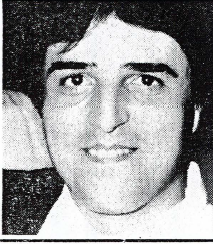
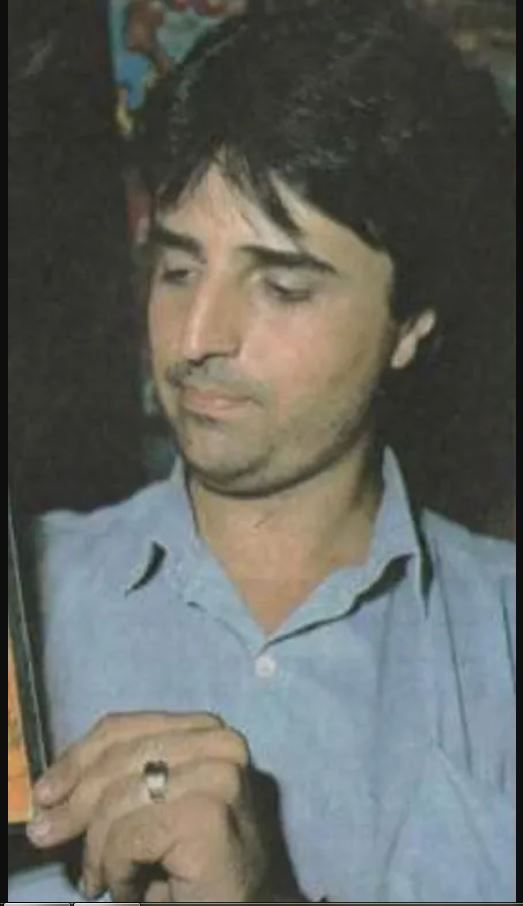
On April 17 1991, Peter Mitris, comic store
retailer, comic book collector and dealer, and drug
importer, armed robber, and drug dealer, vanished
into thin air. Despite an extensive search, he was
never seen again.
The great Jack Kirby once famously said to a fan,
“Comics books will break your heart.” If he had said
that comic books would eventually kill you, he’d
still have been right. In the case of Peter Mitris,
it wasn’t the comic books that killed him though, it
was a combination of brass knuckles and the ocean.
For close to three decades now the mystery of Peter
Mitris has both titillated and puzzled the
Australian comic book world. The rumours, the myths
and speculation of what happened to the man who
helped organise the first real international comic
book convention the country had seen, and, through
his store, bought and sold comic books, including a
near perfect Action
Comics #1
have been spoken in hushed tones by those who claim
to know.
In those half-truths and rumours lay the truth.
Peter Mitris, one-time comic book dealer had a very
dark side of drug importation and crime, which
eventually caught up with him and led to his demise,
and a grisly demise it was. How many knew of this
dark side and demise is open to more speculation,
but, here, finally, is the truth of what happened to
Peter Mitris, once and for all.
Old friends, Peter Mitris and Richard Rae, were also
partners in a Sydney comic store called Comic Empire[i].
Both had strong connections with the Australian
comic book scene, both were collectors, both were
dealers, and both were artists. Mitris had done his
university training as an architect, Rae had worked
for K.G. Murray and eventually became a publisher,
and, in doing so, he published at least one comic
book with Mitris’ art[ii].
Those who shopped at Comic Empire have mixed
memories of it. Where most found Rae to be a bit of
a fantasist, if not an outright bullshit artist,
Mitris was considered to be down to earth and
friendly. “I quite enjoyed his company,” “Normal
enough bloke. Into comics. Didn’t give off a drug
importer vibe. Nor would he. Very normal Greek boy,”
“Never had an issue with him,” and “Lovely.
Friendly. Honest,” were some of the comments that
were sent to me when I told people I was writing
about Mitris. One story, however, shows the
difference between Rae and Mitris.
“When some reprobate stole my X-Men collection,”
says ‘B[iii]’,
“Richard Rae bought it off the thief. When Peter
found out they matched the ones that I’d been
looking for he handed them back. 100 comics.” Many
were wary of Rae, including Mitris himself. To
counter the problems he was having with Rae, Mitris
hired a man called Ken, first as a part time worker
which eventually turned into a permanent position.
This caused further tension with Rae, as Rae viewed
Ken’s employment as an effort to undermine his own
position, resulting in Rae becoming bitter towards
Mitris.
In 1986, Rae and Mitris organised the Australian
Comic Book Convention, which was held in Sydney,
over a weekend at the Opera House. For the first
time in Australia, international guests were
invited, in the form of Stan Lee, Will Eisner and
Jim Steranko. All three were promised return plane
tickets, accommodation, and expenses for two people
each, but Lee wanted first class tickets. Rae wrote
to Lee accepting this request only for Lee to
discover that he’d be flying economy when the
tickets arrived. Faced with a long plane trip in
cattle class, Lee pulled out.
Mitris was helping finance and organise the event,
but the name on all the advertising was Richard Rae.
Mitris was hoping to auction off his copy of Action
Comics #1,
which was in perfect condition, and, indeed, the
comic was used as the centrepiece of an on-site
auction run by Mitris. Despite attracting a bid of
$8,500, Mitris didn’t sell the comic, and later
offered it, through a fan magazine, for $18,000. It
is unknown if he ever did sell the comic.
Mitris left the organisation of the convention to
Rae. From all accounts, both men were using drugs at
the time, funnelling profits from both Comic Empire
and the convention into powdered goods, and as such,
the convention suffered. Those who walked into the
event on the first day were greeted by the sight of
Will Eisner sitting on the edge of the stage –
nobody had set him up with a booth. Steranko wasn’t
even there – he arrived two days later on the
Sunday. In order to pad the convention out, a
visiting John Dixon was press ganged into being an
official guest.
It got worse for those attending that first day.
Both Rae and Mitris both knew at least a week before
the convention that Lee wouldn’t be turning up, but
Rae continued to promote Lee as a guest. The first
the public knew of Lee’s no show was on the first
day when questions were asked about when he’d be
arriving.
The first convention panel consisted of Eisner and
Frants Ksantor sitting on the edge of the stage
being interviewed by Frank Maconochie, who was
launching Phantastique.
As the weekend went on, chairs and a table were set
up on the stage and Cyclone
Comics artist
Alex Drescher, who had a natural talent for
speaking, was asked to be the panel moderator. The
panels themselves consisted of the same people,
rotated, being asked the same questions.
As both Phantastique and Cyclone
Comics were
having their launches at the event, the likes of
Gary Chaloner, Dave deVries, Glenn Lumsden, Steve
Carter, Frank Maconochie, and Des Waterman were also
put onto hastily arranged panels. The panels weren’t
planned, Rae would simply grab who was nearby, throw
them onto a stage and then make an announcement over
the PA system.
So poor was the organisation that an official
photographer wasn’t even considered, leaving the
only photographic evidence of the event in the hands
of those with portable cameras. After being bailed
up and yelled at by Steranko in full view of the
public, Rae organised a dinner for Eisner, Steranko,
Dixon and their wives at the famous Beefsteak and
Bourbon Bar in Kings Cross. The group arrived, and
were met by the Cyclone
Comics crew.
All the food and drink had been paid for, which was
fortuitous as Rae failed to turn up. It was left to
Alex Drescher and Dave deVries to play hosts.
In short, the convention was a mess, but people did
turn out, contacts and friendships were made and
solidified and, in that regard, those who were there
still look back upon it with fondness – the birth of
an era for Australian comic books.
The convention, while considered a success, was
actually somewhat of a financial failure due to the
expenses and drugs, and further widened the rift
between Mitris and Rae to the point where Comic
Empire was wound up and the two men went their
separate ways. Rae entered into a series of dubious
activities, the results of which still haunt him to
this day.
Mitris kept his hand in with dealing in comic books,
but rumours began to spread that he was also dealing
in other, illegal, products. None of this could be
proven at the time and those who saw Mitris in the
years between 1986 (the Convention) and 1991 (when
he went missing) all say that, while a bit
standoffish at times, was still his friendly self.
But Mitris was, indeed, hiding a secret life, a life
of crime. This all ended in April 1991 when he
appeared to vanish into thin air, never to be seen
again.
Speculation began almost immediately. A person who
knew Mitris, and had some business dealings with
him, who I’ll call ‘A’, told this author that Mitris
had been kidnapped and tortured, eventually being
thrown off the Sydney Harbour Bridge. When asked how
he knew this, ‘A’ claimed that he, himself, was
kidnapped at the same time, and was not only there
when Mitris was thrown into the Harbour but was
forced to assist in the deed. I pointed out that, if
he didn’t help Mitris, and did help throw his body
off the Bridge, this could potentially leave him
open to accusations of being an accessory,
especially if ‘A’ had never given his account to the
police. The reply was silence.
The rumours about Mitris only increased as time went
on. Other accounts had Mitris entering a witness
protection plan, leaving his family behind as he
established a new life in either a new state or a
new country. This account has Mirtis changing his
name and still living in Sydney somewhere, but he
hasn’t been seen by anybody who knew him for three
decades now. Another account claims Mitris was
murdered and dumped into the ocean or was chopped up
and fed to pigs.
Ultimately all of the theories were just that,
theories. What really happened to Peter Mitris is
close to some of those theories, but the truth is
far more gruesome. Here, finally, is the truth,
taken from court documents, as to what happened to
Peter Mitris.
Four men would be named as playing a part in the
disappearance and death of Peter Mitris. They were,
Nicholas Constantin, Peter Konomos, who was Mitris’
cousin, James Taousanis and Steven Kouroumalos[iv].
Mitris, Constantin, Konomos, Taousanis and
Kouroumalos were, allegedly, heavily involved in the
importation of cocaine and armed robberies. The
armed robberies were collectors chosen by Mitris and
the main targets were rare comic books, which Mitris
would then sell to other contacts that he had. In
these robberies, Mitris would not be present as he
believed he’d be recognised by the collectors. When
it came to drug dealing and importation, he was more
hands on[v].
Mitris’ preferred method of drug importation was via
paper, magazines and comic books, which were then
bundled up and sent to his home address. The cocaine
was impregnated into the pages of the product in the
bundles. As he was known as being a comic book
dealer, it was a perfect way to smuggle drugs –
nobody would look twice at packages of comic books
and magazines being sent to a comic book dealer.
One particular shipment went missing. Mitris’ wife
opened the package, believing that it was addressed
to her and, discovering a pile of blank paper
between the magazines, threw the blank paper into
the bin. The shipment was worth an estimated
$30,000. People wanted restitution. Mitris didn’t
have the drugs, nor did he have the money.
Konomos and Taousanis were also mad at Mitris over
an armed robbery gone wrong. Mitris had set up a
fellow comic book dealer to be robbed at gunpoint,
with the target being rare, and highly valuable,
comic books, which Mitris would then on-sell to his
comic book contacts. The robbery went very wrong
when the comic books stolen turned out to be modern
day comics worth a fraction of what was expected. As
with the drugs, Konomos and Taousanis fully expected
Mitris to make good on the deal, which was estimated
to turn a profit of approximately $100,000. When all
was said and done, Mitris was in the hole for an
estimated $150,000[vi].
All four men in the syndicate began to place
pressure on Mitris. They wanted the drugs, the comic
books, or the money, in full. Pressure was placed
upon him and threats made to both his life and that
of his family. It is here that some people still
believe that Mitris went to the police and gave
evidence and either entered into witness protection
or merely fled the city, cutting all ties with his
family and friends, vanishing forever. The truth is
far more gruesome.
The following is taken from the evidence given by
Kouroumalos, Constantin and a man who was only known
as “Mr. Brown”, and whose name remains suppressed
after all these years. As such it remains the only
account ever given, under oath, as to what happened
to Mitris. The evidence was given during the trial
of the only person charged with Mitris’ murder –
James Taousanis[vii].
According to Mr. Brown, on the 17th of
April 1991, Mitris was picked up by Konomos, and
driven to Kings Cross on the pretense of viewing a
property. Once there, Mitris was told to wait while
Konomos ran an errand, and, suspecting nothing, he
complied. Konomos then returned with Taousanis and
Kouroumalos. Mitris was called down and all four men
drove off.
The car stopped in the Surry Hills area and the
occupants changed positions, so that Taousanis was
seated in the back with Mitris. Taousanis then
produced a Glock pistol, which Kouroumalos had
previously seen in his possession, and began to beat
Mitris about the head with it.
“You ripped us off on a package that was worth a lot
of money,” Taousanis began to yell while beating
Mitris. Mitris, fearing for his life at the sight of
the pistol, strenuously denied having ripped the
others off. Taousanis was having none of it.
“You fucked up the robbery,” he continued. At this
point tape was produced from the glove box of the
car and was used to seal Mitris’ mouth. His hands
were tied behind his back with plastic electrical
cord. Turning to the other men, Taousanis then
spoke to them. “Let this be a lesson to anyone who
fucks me around or steals off me”.
Shortly after dark, the car carrying the four men
arrived at a house in Petersham. According to
Kouroumalos, Mitris was escorted to the house and
taken to an unlit room. What Mitris saw must have
made his blood run cold. The walls and floor of were
covered in clear plastic and the one window was
covered with paper. The room was completely bare
except for a chair, upon which Mitris was taped to.
Taousanis put on knuckle dusters and began to beat
Mitris about the head and body, repeating his claim
that this was what happened to anyone who robbed
him. Eventually Mirtis’ cousin, Konomos, asked for
the knuckle dusters and also beat Mitris.
Kouroumalos has always maintained that he left the
room but was called back. Taousanis then asked him
if he wanted to bash Mitris but he declined. “I want
nothing to do with this,” he told Taousanis. After
one sustained beating, Taousanis, grinning, asked
Konomos, “Did you see the way I broke his neck?”
By this stage Mitris was covered in blood, slumped
in the chair and was, mercifully, unconscious.
The three men left the room, leaving Mitris, who was
still breathing, tied to the chair. They got back
into the car and drove off. While dropping
Kouroumalos off at Marrickville, Taousanis and
Konomos gave him a strong warning. What had just
happened to Mitris could just as easily happen to
him if he did the wrong thing by them. Kouroumalos
got the hint and, instead of going to the police,
went back home.
What happened next is unknown, but at some point in
the next few days, Taousanis and Konomos allegedly
murdered Mitris.
Taousanis and Konomos then arranged for an
associate, named in court as being Fred Massih, to
use a fake name, Mustafa Mahamad and buy a boat.
This was done on 26 April, eleven days after Mitris
went missing. Shortly after, Mitris’ body was
wrapped in plastic, bound with tape and weighed
down. The boat went out to sea and Mirtis was
consigned to the deep. His body has never been
located.
In August 1994, a fisherman, Mark Peterson, was
fishing in the Hawkesbury River when he brought a
body to the surface. The decomposed body was wrapped
in plastic, with a noose around the neck and tied to
a steel cross by wire. The cross was attached to a
steel frame, resulting the man being known as The
Rack Man. Facial reconstruction was released to the
media and people noticed that he bore a striking
resemblance to Mitris. The corner found that the
Rack Man had suffered serious head injuries before
being dumped, the same as what was rumoured to have
happened to Mitris.
The Rack Man was proven not to be Mitris though, as
the body was the wrong height. People still
suspected that the Rack Man was Mitris though, but,
in 2018, the Rack Man was formally identified as a
Sydney gambler named Max Tancevski. Tancevski
allegedly owed less money than Mitris, and there is
evidence that the same thing happened to both men –
both were bashed in the head, bound, and gagged and
dumped into the sea. Unfortunately for Mitris, he
was dumped further out than Tancevski.
In 1999, James Taousanis was formally charged with
the murder of Peter Mitris. He pleaded not guilty.
Evidence was given by Constantin, Kouroumalos and
‘Mr Brown’, with Konomos having gone back to Greece[viii].
‘Mr Brown’ gave evidence that Taousanis had wanted
to climb the crime ladder in King Cross and had
boasted of doing ‘a boat job’ on Mitris. Constantin
and Kouroumalos both in gaol, gave evidence about
the day in question. In his defence, Taousanis
produced a diary that had been in the possession of
the National Crime Authority since 1991, and which,
it was claimed, proved his whereabouts on the day in
question. Taousanis lawyer then told the jury that
it was uncertain if Mitris was dead, or that he had
survived the beating and died elsewhere.
‘Mr Brown’ produced notes, which he claimed, proved
that Taousanis had killed Mitris, but these notes
were made in 1996 and not handed over to police
until September 1997.
Ultimately the judge, realising that Taousanis and
the other men involved in the trial had their own
motives to harm the other, and seeing
inconsistencies in their evidence found them to be
unreliable. Plus there was no body to either verify,
or discredit, the claims. The first murder trial had
resulted in a deadlocked jury and both the Crown
Prosecutor and Taousanis’ lawyer agreed that the
evidence, as it stood, was insufficient to find
Taousanis guilty. Despite finding that the details
of Mitris’ demise, and the lead up to it, were
accurate, the presiding magistrate agreed that the
evidence was flawed. He duly found Taousanis not
guilty and acquitted him.
The chapter of Peter Mitris was now closed,
seemingly forever. Those who killed Peter Mitris may
never be held to account for the crime. No matter
his crimes, his family didn’t deserve to be robbed
of Mitris, there is no body, there is no closure for
them.
As for Mitris’ one-time business partner Richard
Rae, he has led a very varied life since those heady
times in the 1980s. His fall from grace came, not
suddenly, but over an extended period of time. His
life has been one of alleged crimes, but on a
different scale to Mitris. In his time, he has
misrepresented himself as both a publisher and
packager. He has stolen ideas from others and
claimed credit. Over the years, he has commissioned
art from artists both locally and overseas, none of
which was ever paid for.
He has also been alleged to have taken art under
false pretences from Australian artists, such as
Stan Pitt, Hal English, and others, which he has
sold, or attempted to sell, with varying degrees of
success. He has misrepresented art, attempting to
sell art that has been inked over photocopies as
being originals by the likes of Jack Kirby and Jim
Steranko. All of this made him a pariah, not only in
the Australian comic book scene, but also worldwide.
When his activities became too much for people to
deal with, he faked his own death, and resurfaced
under an assumed name, again trying to sell items
from his ‘estate’. Those who paid for the items
never saw them. Just like Lazarus, Rae eventually
‘rose from the dead’ and resumed his activities.
Rae’s best-known scam incredibly didn’t involve
comic books or art, came when, after being sacked as
One Nation’s press secretary, he was involved in the
leaking and publication of photos that were alleged
to be Pauline Hanson naked in 2009. Much like
everything that Rae has been involved with since the
1980s, the photos were proven to be fake. His work
with Pauline Hanson, would result in him being
punched out by a member of the musical group Mental
As Anything. It was often been claimed that Rae was
the man behind the now discredited semi-nude shots
of Hanson under the guise of any publicity is good
publicity.
Despite the flaws of both Rae and Mitris, and
despite the tragic end of Mitris’ life, their
importance in the overall history of Australian
comic books since 1980 cannot be denied. Comic
Empire is still fondly remembered by those who used
to shop there. Both men are remembered as being
approachable and, depending on the person telling
the tale, friendly.
The 1986 Australian Comic Book Convention was the
fourth such convention in Australia, after two
earlier attempts in Melbourne[ix] and
one in Sydney[x],
and the first convention to feature international,
non-Australian guests. That the convention had its
issues and was haphazard could be put down to the
drug intake of Mitris and Rae, along with sheer
incompetence. But the 1986 Convention was the last
such convention until OzCon began in 1992. It can be
debated that OzCon would have happened without the
1986 Convention, but without Rae and Mitris leading
the way and providing an example, both of how to,
and not to, do things, it can also be argued that it
might have taken longer to get off the ground. The
1986 Convention paved the way for OzCon, Supanova,
Armageddon, ComicCon Downunder OzComic Con and any
number of smaller such conventions in Australia.
If that was the legacy of Peter Mitris and Richard
Rae, then history would be kinder to both men.
Sadly, it isn’t the case.
 Peter MITRIS