 Ronen VEINSTEIN aka all the following names:
Ronen Wainhtein, - Ronen Wainshtein,
- Ronen Wainsthein, - Ivan Sibony, - Aviv Gonuonzki, - Erez Wienstien, - Ronen
Vinstein, - Ronen Veinstein, - Ronan Weinstein, - Ronen Weinstein, and - Ronen
Wainsthein
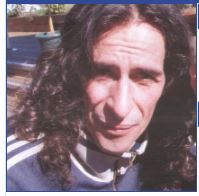
|
Details |
|
Name: |
VEINSTEIN Ronen |
Sex: |
Male |
|
Year of Birth: |
1964 |
|
|
|
At Time of Disappearance |
|
Age: |
40 |
Height (cm): |
185.0 |
Build: |
Thin |
|
Hair Colour: |
Brown |
Eye Colour: |
Brown |
Complexion: |
Fair |
|
Nationality: |
|
Racial Appearance: |
Middle Eastern |
|
|
|
Circumstances |
|
Ronen VEINSTEIN, 40, was last seen in the Mooball NSW area in
December 2004 and has not been seen since. There are grave concerns
for his welfare. He is described as being 185cm in height, thin
build, of Caucasian appearance with brown hair and brown eyes. He
has a tattoo of a butterfly on his left ribcage and the word Kimbo
tattooed on the left side of his body. If you have information that
may assist police to locate Ronen please contact Crime Stoppers on
1800 333 000 or via Crimestoppers.com.au. |
CORONER’S COURT OF NEW SOUTH WALES
Inquest into the death of Ronen Veinstein
Introduction
1 2 3 4 5 6 7 8 9 10 This inquest concerns the disappearance of Mr Ronen
Veinstein. Mr Veinstein was born on 9 October 1964 in Israel. At the time of his
disappearance Mr Veinstein resided with his wife, Mrs Regina (Ginni) Veinstein
and their children in Mooball, New South Wales. Mr Veinstein was last seen alive
in Mooball, in December 2004, after Mrs Veinstein returned home from shopping
and discovered that he was not at home. He did not return home subsequently. Mr
Veinstein was reported to Byron Bay police as a missing person by a friend on 25
May 2005. On 27 September 2007, Mrs Veinstein was arrested and charged with Mr
Veinstein’s death. On 3 April 2009, the Director of Public Prosecutions withdrew
the charges against Mrs Veinstein. The New South Wales Police Force (NSWPF)
continued to investigate the whereabouts of Mr Veinstein. Unfortunately, all
enquiries failed to establish the current whereabouts of Mr Veinstein. On 19
July 2011, Police filed a “Report of Suspected Death to the Coroner,” confirming
his disappearance and indicating that it was suspected that Mr Veinstein was
deceased. This inquest has focused on determining if Mr Veinstein is deceased,
and if so, whether the cause and manner of his death can be determined. Mr
Veinstein’s former partner and one of his sons has been present during these
proceedings. I would like to acknowledge the unimaginable diAiculties his family
are experiencing with the lack of conclusive evidence relating to his
whereabouts and his fate. I would like to thank his family for their
contribution and participation in this inquest. I hope that his memory has been
honoured by the careful examination of the circumstances surrounding his
disappearance. I would also like to express my personal condolences to Mr
Veinstein’s family and friends.
The role of the Coroner and the scope of the inquest
11 12 13 14 15 When a case of a missing person who is suspected to have died
is reported to the Coroner, the Coroner must determine from the available
evidence whether that person has in fact died. If a Coroner forms the view that
a missing person has died, the Coroner has a statutory obligation to make
findings about the identity of the person who died, when and where they died,
and the cause and manner of their death. If the Coroner is unable to answer any
of these questions, then an inquest must be held. In Mr Veinstein’s case, the
missing person investigation conducted by the New South Wales Police Force (NSWPF)
has been unable to locate him or any physical evidence as to his location since
25 May 2005. As such, it is not possible to answer all of the questions that a
Coroner is required to answer, and an inquest has been held. During these
proceedings, a brief of evidence containing statements, photographs and other
documentation, was tendered in court and admitted into evidence. The current
officer in charge of the investigation, Detective Senior Constable Scott Wilcox
gave oral evidence. All the material placed before the Court has been
thoroughly reviewed and considered.
Mr Veinstein’s background
16 17 18 19 Mr Veinstein was born in Israel. He arrived In Australia in 1989,
together with his then partner, Ms Karni Shai. Mr Veinstein and Ms Shai have one
son, Mr Jonathon (Booni) Shai. He was born in June 1993. Their relationship
ended sometime after their son’s birth, and Ms Shai and Jonathan returned to
Israel for about “four or five years”. They both returned to Australia in 1997.
There is limited evidence which suggests that Mr Veinstein has two other
children to two diAerent women in Israel, although their names and other details
are unknown.
20 Mr Veinstein had a documented history of drug misuse, particularly
relating to heroin. He had been using heroin since he was 16 years of age. His
mother would assist him financially as his drug use prevented him from
maintaining employment while he was domiciled in Isreal.
21 22 23 24 25 26 27 28 29 30 31 Mr Veinstein went through periods of
abstinence from illicit substances but reported that these periods of time left
him feeling as if there was a “black hole” inside him. In September 2000, Mr
Veinstein met Ms Helga Hunke when he was living in Brunswick Heads. They married
in November 2000. Ms Hunke did not see Mr Veinstein using heroin when they first
met but did recall his use of cannabis. During their short marriage, Mr
Veinstein recommenced his use of heroin, and the relationship ended shortly
afterwards. In 2001, Mr Veinstein met Mrs Regina Syme who owned a coAee shop in
Mullumbimby. Mrs Syme had been separated from her husband, Mr Tony Syme, since
1999. In 2002, Mr Veinstein and Ms Hunke divorced, as did Mr and Mrs Syme.
Mr Veinstein and Mrs Syme married in April 2002. Mrs Regina Syme adopted her
husband’s surname, becoming known as Mrs Regina (Ginni) Veinstein. Together they
had two children, Kesem and Noah. Mrs Veinstein also had a child, Eden, from a
previous relationship. Mr and Mrs Veinstein resided at 79 Pottsville Road,
Mooball with the three children. Mooball is a small town which is located about
35 kilometres from Byron Bay. The property at that time was described as a
seven-acre rural property, with a house and studio. The property was registered
in Mrs Veinstein’s name, although they both contributed to the mortgage
payments. Mr and Mrs Veinstein operated a joint bank account. Mr Veinstein had a
credit card in his name and did not own a mobile phone. The couple owned a 2001
Mitsubishi 4-wheel drive vehicle which was purchased on finance and used by both
of them. Mr Veinstein was working casually and as a sub-contractor for a company
called “Always Painting”, which was run by a friend of Mr Veinstein’s, Mr Oren
Tabakof. Mrs Veinstein indicated to police that Mr Veinstein was using drugs,
however, was uncertain what drugs he was using.
Criminal History and the use of multiple alias names
32 33 34 35 36 37 38 39 Mr Veinstein had first come to the attention of NSW
Police in 1993. In 1993, he was found guilty of two fraud oAences and placed on
a three-year Good Behaviour Bond with supervision from the NSW Probation and
Parole Service. In 1994, he was convicted and fined for two separate shoplifting
oAences. In 1994, an application was made to the Local Court by the Probation
and Parole Service, indicating that Mr Veinstein had breached the Good Behaviour
Bond, imposed in 1993. An arrest warrant was issued on 8 September 1994. Mr
Veinstein left Australia on 19 September 1994 and returned on 3 March 1999. He
was arrested due to the warrant on 8 October 1999, although no action was
ultimately taken by the Court on the breach of his bond. Mr Veinstein was known
to use various aliases, including the names of people he knew, as well as
variations on the spelling of his first and last names. The names included: -
Ronen Wainhtein, Ronen Wainshtein, - Ronen Wainsthein, - Ivan Sibony, -
Aviv Gonuonzki, - Erez Wienstien, - Ronen Vinstein, - Ronen Veinstein, - Ronan
Weinstein, - Ronen Weinstein, and - Ronen Wainsthein
The name he used for his driver’s licence and other Transport for NSW records
was “Ronen Veinstein”. His driver’s licence expired in 2006.
The name that appeared on the NSW Police Force COPS system was “Ronen
Wainshtein”, although the various aliases referred to above, were also included
on the Police Force’s COPS system.
Department of Immigration and Multicultural and
Indigenous AAairs (DIMIA) records
40 41 42 43 44 Immigration records disclose that after Mr Veinstein returned
to Australia in 1999, he left Australia on only one other occasion, being 5
February 2000 and returned on 4 May 2000. On 25 October 2001, Mr Veinstein was
arrested by DIMIA compliance oAicers, due to his expired visa. Mr Veinstein
contested the basis of his arrest, claiming that he had married a woman named Ms
Caitlin McKewon on 10 January 1990, some four months after he arrived in
Australia in the company of Ms Shai. He claimed that due to his marriage to Ms
McKewon, he had applied for permanent residency, however, the relationship ended
and his application was refused. Ms Veinstein was released from Immigration
detention and placed on a bond. He was also refused a further stay in Australia.
Mr Veinstein lodged an application for a new visa which was declined. He
appealed DIMIA’s determination and successfully argued his case, which resulted
in the original decision being overturned. He was granted a Bridging Visa, which
permitted him to stay in Australia while his application was being processed.
On 1 September 2003, DIMIA wrote to Mr Veinstein advising him of his obligations
to present for mandatory health checks and police probity checks as part of his
application. On 16 September 2002, Mr Veinstein contacted DIMIA to enquire about
the location of the service providing the health check and to notify the
Department that they still had possession of his passport following his arrest
in 2001. DIMIA records disclose that they had no further contact with Mr
Veinstein and his case was finalised on 26 September 2005. It is noted that his
bridging visa expired on 24 October 2005, rendering him an unlawful non-citizen.
Factual Background relating to Mr Veinstein’s
disappearance
45 46 Mr Veinstein was last seen in December 2004. Sometime in December 2004,
Mrs Veinstein called her friend Ingrid to ask for her assistance with the
children as Mr Veinstein had left the house and had not returned. Ingrid
attended the premises and encouraged Mrs Veinstein to contact the NSW Police and
report Mr Veinstein as a missing person.
47 During December 2004 and January 2005, Mrs Veinstein’s former husband, Mr
Tony Syme attended her home on a number of occasions. During those visits he
recalled that Mrs Veinstein received a number of phone calls from Mr Veinstein’s
mother, Ms Lydia Wagner and other family members in Israel. The communications
established that no-one had heard from Mr Veinstein, and no-one knew his
whereabouts.
48 49 50 51 52 53 54 55 On 25 May 2005, Mr Ami TabakhoA reported Mr Veinstein
as a missing person to Detective Senior Constable (DSC) Hutchinson. He was
concerned that Mrs Veinstein had not already reported him as missing. On 26 May
2005, Mrs Veinstein participated in the first of two voluntarily recorded
records of interview with NSW Police. In her first interview, Mrs Veinstein told
police that she had left the farm in the morning with her three children to go
shopping in town. At that time, Mr Veinstein was at their home. She confirmed
that they only had the one vehicle, being the Mitsubishi 4 wheel-drive. Mrs
Veinstein told police that she had returned home sometime later that day and
found that Mr Veinstein was not at home, and that his wallet and passport were
missing. She was asked if he took any clothing and she responded “well some” but
stated that she could hardly remember anything. She could not recall what day
this occurred. She recalled that this was not the first time he had left home
without notice, referring to an occasion when he “went oA to South America.” Mrs
Veinstein told police that he was using drugs and they were having a lot of
arguments about money issues. Mrs Veinstein indicated that she had also
experienced depression for the last two years. Mrs Veinstein was asked by police
about their banking arrangements. Mrs Veinstein indicated that they had a joint
bank account, which had not been accessed by him since his disappearance. She
was also asked about his access to credit cards. She responded with a
non-responsive answer, referring instead to a photograph of Mr Veinstein and his
mother. On 2 June 2005, Ms Shai provided a statement to police. She confirmed
that her son Jonathon had been visiting Mr and Mrs Veinstein, when he witnessed
a fight between the Veinsteins, where Mr Veinstein was hitting Mrs Veinstein and
throwing items in the swimming pool. Jonathan contacted Ms Shai and she
collected him from the property. He had little contact with Mr Veinstein
afterwards. 7
56 On 7 June 2005, Detective Hutchinson made enquiries with DIMIA. DIMIA
confirmed that Mr Veinstein had arrived back in Australia on 4 May 2000 and had
not left Australia after that date.
57 58 59 60 61 62 63 64 65 On 27 April 2006, Detective Senior Constable (DSC)
Duncan King became involved in the investigation and Strike Force Wondaree was
established to further investigate Mr Veinstein’s disappearance. On 8 August
2006, Mr Ami TabakhoA provided a statement to police, indicating that he had
last seen Mr Veinstein in either November or December 2004. Police then spoke
with a number of other potential witnesses. On 31 August 2006, Mrs Veinstein
participated in her second voluntary electronically recorded witness statement
with police. Her account in this interview was largely consistent with her
earlier recorded interview. Between August 2006 to August 2007, enquiries were
made through Interpol in an attempt to obtain a DNA sample from one of Mr
Veinstein’s family members. A sample was obtained; however, no successful match
has been made to any unidentified body. On 27 August 2007, Mrs Veinstein had a
number of conversations with witnesses regarding the events surrounding Mr
Veinstein’s disappearance. Over the ensuing day, she had further conversations
with a number of people regarding similar disclosures. On 30 August 2007, Police
confirmed that “information was received (from witnesses that Regina Veinstein
had confessed to murdering Ronen Veinstein to the witness.” The
information provided to police was that Ms Veinstein had confessed to hitting Mr
Veinstein over the head with a rock as he was lying asleep and then burning his
body and scattered his ashes all around their property at Mooball. She was
further alleged to have stated to a witness, “I killed him on 9 December 2004.”
On 27 September 2007, Mrs Veinstein invited two of Mr Veinstein’s friends to the
property in Mooball to view the areas where she had burned Mr Veinstein’s body
and subsequently disposed of his remains on the property. After leaving the
property, the two friends went to the police with a piece of cloth and an ashen
substance that they had retrieved from the property. On 27 September 2007,
police arrested Mrs Veinstein and charged her with the murder of her missing
husband.
66 Police conducted a recorded interview with Mrs Veinstein immediately after
her arrest. Mrs Veinstein declined to answer any questions.
Forensic Examination and other enquiries
67 68 69 70 71 72 73 74 75 76 77 A Crime Scene Warrant was granted to the
investigating Police on 27 September 2007, following Mrs Veinstein’s arrest.
Police conducted various searches of the property at Mooball, including the
house and studio over a four-day period, commencing on 28 September 2007.
Forensic testing was conducted in various areas of the house, including the use
of luminol. The luminol testing produced a positive reaction to blood, however,
the sample was not a match for Mr Veinstein’s blood or DNA. Police excavated a
number of areas of interest on the property. One area of interest which was
excavated was found to contain the partial remains of a horse. On 2 October
2007, Police applied for, and were granted, a Crime Scene Warrant for the
Mitsubishi 4WD. Two areas of interest were located, however, neither area
matched Mr Veinstein’s blood or DNA. On 4 October 2007, Police conducted a
further search of the Mooball property. DSC King made numerous enquiries with
various government departments and service providers, which indicated that Mr
Veinstein had not used any government service, banking, telecommunication
service or utility since December 2004. On 29 October 2007, DSC King sent a
report to the Director of Public Prosecutions (DPP), requesting a review of the
brief of evidence with a view to withdrawing the charges against Mrs Veinstein.
The prosecution proceeded to a committal hearing on 8 August and 14 November
2008. On 3 April 2009, the charges were withdrawn by the prosecution. On 2
August 2018, Detective Sergeant Rodney Vandermaat was allocated the case and
reviewed the investigation into Mr Veinstein’s disappearance. Detective
Vandermaat sought to re-interview Mrs Veinstein. His enquiries indicated that
she had left Australia on 4 October 2021 and has not returned to Australia. 9
Evidence of Detective Senior Constable Scott Wilcox
78 79 80 81 Detective Senior Constable Scott Wilcox was assigned to this
matter in 2021. He has prepared two statements in these proceedings, both dated
20 February 2026. In addition, Detective Wilcox gave sworn oral evidence on 25
February 2026. Detective Wilcox gave evidence that he had recently conducted
“Signs of Life” checks regarding Mr Veinstein. These checks included:
- State and Territory Missing Person’s Units,
- Banking institutions,
- Medicare,
- Births, Deaths and Marriages,
- NSWPF COPS entries
In addition, Detective Wilcox has made enquiries concerning DNA profile
matches in Australia relating to unidentified human remains, without success.
Detective Wilcox expressed his opinion, based on his review of the evidence and
his most recent enquiries, that Mr Veinstein is no longer alive.
Can it be concluded that Mr Veinstein is deceased?
82 83 84 85 86 The first finding that a Coroner is required to determine
following an inquest into the suspected death of a missing person is whether
that person is deceased. This question is required to be determined on the
balance of probabilities, and there must be clear, cogent and exact evidence
that a missing person has died before such a conclusion can be made. Mr Ronen
Veinstein has not been seen since December 2004. Mr Veinstein had been known to
disappear previously, although he would always reappear. Mr Veinstein’s mother
and his brother reside in Israel. He has made no attempt to contact any of his
family members since December 2004. Immigration records confirm that Mr
Veinstein has not accessed an international point of departure since 4 May 2000,
when he returned from overseas. At the time of his disappearance, his passport
was in the custody of DIMIA. His is therefore believed to still be in Australia.
87 88 89 90 Mr Veinstein has not accessed any banking or government services,
nor has he come to the attention of the police in any of the states and
territories. Mr Veinstein has not attempted to contact any of his children,
relatives or friends in Australia since December 2004. The circumstances of his
disappearance appear suspicious, although there is currently no person or
persons of interest relating to his disappearance. The Court has considered all
the available evidence and is satisfied on the balance of probabilities that Mr
Veinstein is now deceased, however, it is not possible to determine either the
cause or manner of his death. Similarly, it is not possible to determine the
date or the location of his death.
Conclusions
91 92 93 94 95 96 97 Prior to December 2004, Mr Veinstein was known to be
socially active and involved with his family and the local community. He was in
contact with his family and friends in Israel.
92 93 94 95 96 97 Prior to December 2004, Mr Veinstein was known to be
socially active and involved with his family and the local community. He was in
contact with his family and friends in Israel. Mr Veinstein’s disappearance was
sudden and complete. His wife was charged with his murder; however, those
charges were eventually withdrawn. Despite further investigations by the police,
no person is currently a suspect in Mr Veinstein’s disappearance and death. It
is important that the investigations into his disappearance and death are
continually reviewed. I am of the view that Mr Veinstein’s death should be
referred to the Unsolved Homicide Squad, and I propose to make that
recommendation. Before turning to the Findings that I am required to make, I
would like to acknowledge my gratitude to Ms Amanda Chytra, Coronial Advocate
for her significant assistance, commitment, support and preparation of this
case. I would also like to acknowledge and thank the OAicer in charge of the
investigation, Detective Senior Constable Wilcox for his assistance with the
preparation of the brief of evidence. Finally, I would like to record my most
sincere condolences to the families of Mr Veinstein.
Findings pursuant to section 81(1) of the Coroners
Act 2009 (NSW)
I make the following findings pursuant to section 81 (1) of the Coroners Act
2009 (NSW):
The identity of the deceased Mr Ronen Veinstein who was reported as a missing
person to the New South Wales Police Force on 25 May 2005, is now deceased.
Date of Death The available evidence does not allow for any finding to be
made as to the date of Mr Veinstein’s death
Place of Death The available evidence does not allow for any finding to be
made as to the date of Mr Veinstein’s death
Cause of death The available evidence does not allow for any finding to be
made as to the date of Mr Veinstein’s death
Manner of Death The available evidence does not allow for any finding to be
made as to the date of Mr Veinstein’s death
Recommendations
I recommend that the death of Mr Ronen Veinstein be referred to the Unsolved
Homicide Team of the NSW Police Homicide Squad for further investigation in
accordance with the protocols and procedures of that Team. I further recommend
that a copy of the brief of evidence and transcript of the Inquest into the
death of Mr Ronen Veinstein be provided to the Unsolved Homicide Team for this
purpose.
I now close this inquest
Magistrate Joan Baptie
Deputy State Coroner
20 March 2026
Mooball body hunt
The daunting task, the property is more than six acres in size, began early
yesterday, with police cadaver dogs sniffing around the property for odours
resembling that of a decomposing body. Little red flags were placed in the front
section of the property, which runs along Pottsville Road, indicating the
highly-trained dog had shown interest in the area. Meanwhile, an
around-the-clock police guard has been stationed at the front of the property
since Friday, with officers conducting 12-hour shifts to protect the suspected
crime scene. A lone forensic officer yesterday stood in the blaring sun, silver
spade in hand, painstakingly inspecting each bucket-load of rich red top-soil.
Another officer with Police Rescue emblazoned across his white jumpsuit could be
seen scouring the nearby bushland. Late last Thursday night, Regina Veinstein,
43, the wife of Ronen Veinstein, the man whose remains police are searching for,
was charged with her husband's murder. Mr Veinstein has not been seen since
December 2004. Police have been conducting national and international searches
for his whereabouts since he was first reported missing in May 2005, after being
contacted by an associate, not his wife. Mrs Veinstein, who had been living in
Ocean Shores at the time of her arrest, pleaded not guilty in Lismore Local
Court on Thursday to killing her husband, saying she believed he was still
alive. It is understood bank accounts belonging to Mr Veinstein have not been
touched since his disappearance, with police failing to find any evidence of him
being alive after December 2004. During her court appearance it was alleged Mrs
Veinstein had admitted to three different people that she had killed her
husband. In those admissions, Mrs Veinstein allegedly described how she had
killed her husband and the events immediately after his death. Her admissions on
September 27 had described how she had burned her husband's body, and precisely
where at the couple's Mooball property she had scattered his remains. But Mrs
Veinstein's counsel said her client's admissions to killing her husband could
not be taken seriously because she was suffering depression something triggered
by the birth of her three children and reinforced by her husband's
disappearance. It is understood that during police searches conducted at the
couple's former Mooball property, which is now up for auction, "forensic
material" had been found, however police would not elaborate on what exactly had
been uncovered. Regina Veinstein is due to reappear in Lismore Local Court via
video link on November 20.
Murder charge dropped in Israeli husband’s death
Prosecutors dropped a murder charge against a woman who allegedly killed her
Israeli husband due to “insufficient evidence” for a conviction.
SYDNEY, Australia (JTA)
— Prosecutors dropped a murder charge against a woman who allegedly
killed her Israeli husband due to “insufficient evidence” for a
conviction.
Regina Veinstein, 44,
allegedly killed Ronen Veinstein, burned his body and then scattered his
remains on their country property near Byron Bay, a surfing mecca
between Sydney and Brisbane.
The German-born
Veinstein was in Lismore Local Court when prosecutors dropped the case
on April 3n April 3, it was reported Monday. The case can be reopened if
“new and compelling” evidence comes to light, a prosecution spokesperson
said.
Ronen Veinstein, a
father of three, was last seen by his wife in late 2004, but his
disappearance was not reported until mid-2005. In September 2007, his
wife was charged with murder. She pleaded not guilty.
During her committal
hearing in 2008, several people — including the local rabbi, Mosheh
Serebryanski — told the court that Veinstein had admitted to them that
she had killed her husband. But her defense team said she was suffering
severe depression and therefore any admissions were compromised.
Ronen Veinstein’s
body has never been found in a search that included digging up the
Veinsteins’ property.
“That’s the biggest
tragedy,” Serebryanski told JTA. “It’s devastating. The bottom line is
there’s someone missing and someone who’s spoken clearly about the
details of it, to myself included. But there’s no hard evidence.”
Ami Tabakhoff, Ronen
Veinstein’s business colleague who testified at the committal hearing,
told the Australian Jewish News, “It’s quite appalling that my friend’s
murder has not been put to justice. Not knowing where his body is
doesn’t help us as friends and as Jews.”
Mooball’s Ronen Veinstein missing person cold case referred to unsolved homicide
team
After a dramatically dropped murder charge, a 20-year mystery, and still no body
or suspect, a New South Wales coroner has officially declared missing Mooball
father Ronen Veinstein dead.
Toni MoonSenior
Reporter Daily Telegraph
Mr Veinstein, an Israeli national who migrated to Australia in 1989, was last
seen alive in December 2004 at the seven-acre rural property he shared with his
wife, Regina, and their children.
The disappearance sparked a complex investigation, complicated by Mr Veinstein’s
history of drug misuse, his use of at least 11 different aliases, and his
expired visa status.
He formed these alternate identities by using the names of people he knew as
well as variations on the spelling of his own name, a practice that coincided
with his history of fraud convictions, arrest warrants, and immigration
struggles.
In her findings delivered on 20 March 2026, Deputy State Coroner Magistrate Joan
Baptie noted that despite his chaotic background, “Mr Veinstein’s disappearance
was sudden and complete”.
In September 2007, the case took a dramatic turn when police arrested Mrs
Veinstein and charged her with his murder.
The arrest followed witness claims that she had confessed to hitting him with a
rock while he slept, burning his body, and scattering his ashes around their
property.
Investigators subsequently executed crime scene warrants, excavating areas of
the Mooball property and testing the family’s Mitsubishi 4WD for evidence.
However, forensic testing yielded no matching blood or DNA, and a major
excavation only uncovered the partial remains of a horse.
Due to the lack of evidence, the Director of Public Prosecutions officially
withdrew the murder charges against Mrs Veinstein in April 2009.
Mrs Veinstein had pleaded not guilty to the murder of her husband in Lismore
Local Court before the prosecution dropped charges against her.
Despite extensive ongoing “signs of life” checks across banking institutions,
Medicare, and border control, Mr Veinstein has not been detected since 2004.
Furthermore, immigration records confirm his passport was held by authorities at
the time of his disappearance, strongly indicating he never left Australia.
Recent attempts by investigators to reinterview Mrs Veinstein were unsuccessful,
as it was discovered she departed Australia in October 2021 and has not
returned.
While officially ruling that Mr Veinstein is dead under suspicious
circumstances, the coroner stated that the available evidence does not allow for
any finding regarding the exact date, place, cause, or manner of his death.
Consequently, the coroner has recommended the baffling case be referred to the
NSW Police Force’s Unsolved Homicide Team for further investigation.
The coronial inquest into Ronen Veinstein concluded on February 25, 2026.