MAY 19, 20166:32AM
 Eric
Herbert WARBURTON
Eric
Herbert WARBURTON
Eric
Herbert WARBURTON
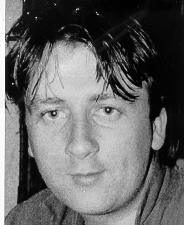
| Sex: | Male | ||
| Date of Birth: | 1961 |
| At time of disappearance | |||||
| Age when missing: | 26 | Height (cm): | 170.0 | Build: | Medium |
| Hair Colour: | Blonde | Eye Colour: | Blue/Grey | Complexion: | Medium |
| Nationality: | Racial Appearance: | Caucasian |
| Circumstances - Eric Warburton was last seen at Kalang NSW in November 1997. He had recently moved into the area and left all belongings behind on the night of his disappearance. |
IN THE STATE CORONER’S COURT GLEBE, NSW SECTION 81 CORONERS ACT 2009
REASONS FOR DECISION
1. This inquest concerns the disappearance and suspected death of Eric Warburton.
Introduction
2. Eric was born in Armidale NSW on 16 March 1961. His parents separated when he was young and by the time he was about 14 years of age, Eric was living an itinerant lifestyle on the streets of Sydney. He lived in a variety of inner city squats and experimented with drugs. He had limited contact with his family.
3. By the early 1980s Eric was using heroin. Around 1986 Eric was living in a small shack on the property of Rodney McKeown and Amanda Vicary at Kalang on the mid north coast of NSW. During this time he would sometimes obtain heroin from a man named John Green in Bellingen. At that time John was in a relationship with Linda Rooney (later known as Linda Verguizas).
4. On 28 August 1988, Eric was reported missing at the Bellingen Police Station by a friend named Allan Armatyge. It appears that by the time this formal report was made, Eric had not been seen since 1987. Police checks made soon after the report revealed that Eric had not collected his Social Security benefits since November 1987.
5. Since Eric’s disappearance, there have been a number of stories and rumours circulating amongst people he knew suggesting that he died from a drug overdose or that he had been murdered. During the course of the investigation, a number of people indicated that they had heard rumors that Eric Warburton had overdosed at John Green’s house and that his body had been disposed of (see for example the statement of Cathy Gibson, exhibit 1, Tab 19). Other rumours were also recounted. Allan Armatyge told police that he had been told by an unnamed neighbor that just prior to the disappearance a car had pulled up near where Eric was living and then drove off with Eric inside. A few days later Eric had not returned, but his property was “intact and untouched”.(see paragraph 13 of Detective Senior Constable Routledge’s statement and Missing Person Report at Exhibit 1, Tab 5) . This version was also attributed to Rod McKeown on whose property Eric had been staying. Mahayla Middlemist had reported hearing a similar story, among other rumours. (see paragraph 56 of Detective Senior Constable Routledge’s statement) An unknown person contacted police and suggested that Eric had been murdered by a grazier due to an ongoing feud between local graziers and hippies. (see paragraph 20 of Detective Senior Constable Routledge’s statement). Milton Reid told Police that he had heard rumours that Rod McKeown had bashed Eric and rumours that Eric had overdosed (see paragraph 20 of Detective Senior Constable Routledge’s statement and his statement at exhibit 1, Tab 20). Many of these reports are best described as unconfirmed gossip or “talk around town”.
The role of the Coroner
6. The role of the Coroner in a case such as this is to make findings firstly as to whether the nominated missing person is actually dead. And if that can be established to make further findings as to the date and place of death and in relation to the manner and cause of death.2
The early investigation into Eric’s disappearance
7. It appears that the early investigation of Eric’s disappearance was somewhat hampered by the fact that his previous itinerant lifestyle and lack of close family ties meant a significant time had already elapsed before NSW Police became aware that he was missing. When Alan Armatyge made his report, Eric had not been seen for almost a year. Eric was known to travel between Sydney and the mid North Coast, he had little or no contact with his family. There appears to have been little or no follow up by family and friends after the initial report.
8. It was not until February 1989 that the Missing Person Unit (MPU) contacted one of Eric’s sisters and gained permission to release his photograph. Following a media release in September 1989, there was an unconfirmed report that Eric had been seen at a party six months earlier.3 There were also two anonymous calls to the MPU stating that Eric had been murdered. Various inquiries were made in relation to his dental records, mail records and with the local bus company.
9. The matter was referred to the Missing Persons Unit and a number of background checks were conducted. Media releases and photographs of Eric were released in 1989 and 2001. However, it appears that there was no sustained or targeted local investigation. Investigation since 2002
10. As a result of the circulation of material about Eric in 2001, a letter was received at the mid North Coast Local Area command from Rosemary Carter. The information contained in the letter prompted NSW Police to look again at Eric’s disappearance. In October 2002 Detective Constable Dean Rutledge was tasked to make further inquiries about the disappearance.
11. Over the next decade very little was achieved. By 2005 Detective Rutledge had identified a number of people of interest to the investigation, including Linda Verguizas, John Green, Roderick McKeown and Amanda Vicary. It took a further five years to interview Linda Verguizas for the first time. Unfortunately, by the time an Inquest was held, Amanda Vicary and John Green were dead and Roderick McKeown could not be located.
12. It is difficult to understand why those inquiries took so long. In July 2013 the P79B form was completed. Some further inquiries were also made including a full review of the unidentified remains recorded with the Missing Persons Unit, further searches of records held by Australian Police Services, Department of Immigration and Border Protection, The Health Commission, various financial institutions and the NSW Electoral Commission. All with no result. The matter was finally reported to the Coroner in November 2013, some 25 years after Eric had been reported missing.
13. The Officer in Charge of the Investigation, Detective Senior Constable Dean Rutledge gave evidence at the Inquest. Although he had continuous carriage of the investigation since October 2002, he was unable to adequately explain a reason for the delays in the investigation of this matter.
The evidence of Linda Verguizas
14. While there have been a number of rumours about the reason for Eric’s disappearance, the most plausible originated in the letter received by NSW Police in 2002.
15. On 8 June 2002, Rosemary Carter wrote to NSW Police stating, “I’m writing to you to relate a confession of a disposal of a body after he overdosed on heroin. This happened 13 years ago and it was told to me by my daughter. Linda Verguiza’s (sic) her name, was then Linda Rooney. She lived with her boyfriend John Green in a squat very close to a sawmill on a back road…Linda told me John and his mate had been out drinking at the pub, I can’t remember what pub it was, and they got back late and all had a hit of heroin. This mate of John’s went unconscious and Linda tried CPR on him. She said she begged John to take him to Bellingen hospital but he wouldn’t. Linda told me John then gave her some other drug to calm her down and he buried him. Whether they both buried him, I don’t know, she wouldn’t give me his name, but she definitely knows where he is buried”4
16. Ms Carter explained that she had tried to get Linda to “come forward and face up to the situation”. Following the letter, Ms Carter spoke to police and confirmed the contents of her letter. Later the same year, Ms Carter wrote again to NSW police providing further information, including a description of the location where the body may have been buried. She told police of others who may also have information, including Linda’s former mother-in-law Susan Verguizas. Unfortunately, Ms Carter died in January 2004 before a comprehensive statement was taken.
17. Over the years Police also received other information indicating Linda Verguizas may know something about the disappearance of Eric Warburton. In 2010 a former partner of Linda’s, Peter Gibson contacted Crime Stoppers and stated that Linda had told him that she had lied to NSW Police about the Warburton investigation. Peter Gibson told Police that Linda had informed him that Eric Warburton had been given a “hotshot” and died of an overdose5. In a statement made in 2015, Mr Gibson confirmed that he had spoken to Linda about Eric Warburton. He said Linda had told him that Eric had overdosed and that she was involved “in getting rid of Eric Warburton’s body. John Green was very thorough. He chopped him up, burnt him and planted a tree on him”.6
18. In 2015, Susan Verguizas made a statement to police stating that during the time her son Angey was married to Linda, Linda had indicated that she had knowledge of two missing people who had overdosed “and were buried in the bush”7. Susan Verguizas stated that her son, now deceased, had told her that these comments were triggered by seeing a Missing Person poster at the local police station.
19. Each of these accounts indicated that John Green and Linda Verguizas may have knowledge or involvement in Eric’s disappearance. However the specific allegation was not put to John Green until April 2015 when he vigorously denied all knowledge of these events.8 He described the allegation that he was involved in the disappearance as “fucking weird”. He suggested that Linda might have “gotten pissed” and told her mother “some shit”. Unfortunately, by the time of the Inquest, John Green was dead and the veracity of his account and his memory of surrounding events could not be tested. Linda Verguizas was first interviewed in 2010 and then again in 2015. On both occasions she acknowledged knowing Eric Warburton at the relevant time, but denied any knowledge or involvement in his disappearance.
20. Linda Verguizas was called to give evidence at the Inquest. She confirmed that Eric had been living in the area and was a friend of Rod McKeown and Amanda Vicary’s. She stated that she did not know Eric well and had only met him a couple of times. Linda said that she was aware Eric would sometimes score heroin down at the river from her then partner, John Green. She denied even remembering what he looked like and said that she only became aware of his disappearance through talk around town or perhaps from the local newspaper.
21. Linda Verguizas gave evidence9 that she did not remember telling her mother that she had been involved in covering up an overdose or disposing of a body with John Green. Her testimony on this was unconvincing. She said her mother was a Jehovah’s Witness who “worried and panicked”. Linda denied telling her mother the story, but added that if she had said anything like that, it would only have been to “get attention” or to “put John down.” She stated that she had been a rebellious teenager and that all she had wanted from her mother was love. She suggested that her mother may have “had Alzheimer’s coming on”.
22. Linda also denied ever telling Peter Gibson that she had been involved in the disappearance. She stated that he had made it up and that he was a nasty person who had caused her many problems and ruined her life in a variety of ways.
23. Linda did not recall telling her ex-husband Angey Verguizas anything about Eric’s disappearance, but seemed to suggest that if anything had been said it would only have been to “seek attention”. She had no real explanation for how her former mother-in-law could have been told this story. By the time of the Inquest, Angey Verguizas was dead.
24. Linda was also asked about an anonymous report that suggested she and John Green were involved in burying Eric Warburton, after he had overdosed, at a community called “Home Lands” out the back of Bellingen.10 She also denied all knowledge of this.
25. Linda was an unimpressive witness who did not have a plausible explanation for how it was that a variety of people reported her claims of involvement in a cover-up of Eric’s death. Given that she said she had only met Eric a couple of times in passing many years ago, it was difficult to understand how she could remember him at all. Her account was wholly unreliable and her demeanour difficult to read. Towards the end of her evidence she became highly and inappropriately emotional, given her own version of events and her complete denial of any involvement. At the conclusion of her testimony the Court retained considerable suspicions in relation to her knowledge of events leading up to Eric’s disappearance.
Is Eric dead?
26. Eric has not been seen since 1987. He has not been in contact with his friends or family. There has been no official record of him using a bank, health care service or leaving the country.11 Perhaps most importantly, he has not accessed a Centrelink payment since around the time that he was last seen. Given his financial dependence on these payments at the time of his disappearance, this is highly significant.
27. Given the seriousness and finality of finding that a person has died, proof of this issue “must be clear, cogent and exact” before a finding can be made12. The evidence in Eric’s case clearly reaches this threshold. It is now almost 30 years since Eric was last seen. While his body has never been located, on the balance of probabilities it is comfortably established that he is dead.
When did Eric die?
28. It is likely that Eric died in November 1987, at around the time his payments ceased. It is possible that he died shortly afterwards. What was the cause and manner of Eric’s death? Where did he die?
29. Without his body or any reliable first-hand account of his death it is impossible to determine exactly what caused Eric’s death or to determine exactly how he died. While he may have died as a result of an accidental overdose, there is also suspicion that there is something more sinister at play, particularly given unconfirmed accounts that he left in a motor vehicle and never returned. It is impossible to say where he died.
30. If his death had been a simple overdose or sudden natural death, his body would most likely have been discovered. Eric may have been the victim of foul play or he may have overdosed and those around him made a decision to dispose of his body so that it would not attract attention to their own activities. Unfortunately, at this stage, while there are suspicions arising from Linda Verguizas’s evidence, it is impossible to know with any degree of certainty what actually occurred.
Assessment of the Investigation and need for Recommendations.
31. It is well established that the period immediately following a disappearance is significant and provides the best opportunity to gather crucial evidence. It is the most effective time to gather information and to focus resources. To some extent that opportunity was lost given the gap in time between Eric’s disappearance and the first report. However, notwithstanding that issue, little seems to have been done even when the report was finally received.
32. Even once significant information was received in 2002, delays in the investigatory process meant that some witnesses had died or could no longer be found for comprehensive interviews.13 It may be that the investigation was neglected because no family member or friend continued to question police about what was happening. However, that is no excuse to place the investigation of Eric’s tragic disappearance at the bottom of a busy work schedule.
33. There is little doubt that the investigation does not meet contemporary standards. However, it appears the problem may be with operational priorities rather than with policy directives.
34. Since this investigation commenced in 1988, NSW Police have completely overhauled internal policies governing this type of situation. The current procedures, set out in “Missing Person – Standard Operating Procedures” (Missing Person SOPS)14 published in 2013 provide a detailed approach to missing person cases and set out clear mandatory steps to guide all such investigations. The new operating procedures set out clear responsibilities and supervisory systems that should ensure a focussed and professional investigation at an early stage.
35. Importantly the new procedures emphasise the need for a quick response to an initial complaint and a commitment to early risk assessment so that an appropriate level of investigative response can be immediately implemented. The new procedures also call for missing person matters to be placed before a Coroner if there are no signs of life after 12 months or sooner in certain circumstances.
36. I have carefully considered the “Missing Persons- Standard Operating Procedures” policy document supplied by the NSW Police Force, which is directly relevant to this Inquest. I accept that recent changes to NSW Police policy, enshrined in this document, mean that further recommendations in this area are presently unnecessary. I decline to make any recommendations arising from the particular facts of this case. If followed, the current procedures provide a comprehensive investigative approach.
37. I am confident that a disappearance such as Eric’s would be dealt with very differently if reported today. However, while recommendations are not called for, it must be stressed that some of the delays which are evident in this investigation are unacceptable and contrary to current policy.
Findings
38. I find, on the balance of probabilities, that Eric Warburton is dead. He died around November 1987. I am unable to determine the place of his death. The cause and manner of his death remains unknown.
39. I offer Eric’s family and friends, sincere condolences.
Harriet Grahame
Deputy State Coroner
10 April 2016
A SYDNEY man who vanished more than 28 years ago was likely murdered or buried illegally after dying from a heroin overdose, a coroner found.
Eric Warburton was 26 years old when he disappeared some time after 1987.
However, he was not reported missing until the following year because his drug habit had led to him drifting apart from family and friends.
Deputy State Coroner Harriet Grahame last week handed down her findings into Mr Warburton’s disappearance, saying police at the time had failed to conduct a “sustained or targeted investigation”.
The inquest heard the mother of one of Mr Warburton’s associates had written to police in 2002 saying her daughter Linda Verguiza had confessed she had been involved in disposing of his body after an overdose in 1991.
A former partner of Ms Verguiza also told police in 2010 she had told him her former partner, John Green, had “chopped up” Mr Warburton’s body, set it on fire and planted a tree on top of his ashes.
However, Ms Grahame found Ms Verguiza’s testimony at the inquest, where she claimed to have no knowledge of his death, was “unimpressive” and said she “did not have a plausible explanation” as to why she had confessed to knowing what happened.
Ms Grahame found Mr Warburton had died but was not able to determine a cause of death.
“If his death had been a simple overdose or sudden natural death, his body would most likely have been discovered,” she wrote.
“Eric may have been the victim of foul play or he may have overdosed and those around him made a decision to dispose of his body.”
BY ALL accounts Eric Warburton’s life was squalid and tragic. Brought up in broken home, by the age of 14 he was living in squats in Sydney poisoning his body with drugs.
But if his life was bad, his death was worse with claims he was chopped up, burnt and a tree planted on the site he was buried.
Yet, the fact he had vanished wasn’t even reported for a year. It seems no one noticed.
Even when Eric’s disappearance was made official, it took police a relaxed quarter of a century to investigate why he vanished. It seems no one cared.
The investigation took so long many of the key witnesses have simply died, meaning it’s unlikely anyone will ever be held responsible.
NSW Deputy Coroner Harriet Grahame found that, on the balance of probability, Eric died in November 1987. She was particularly scathing in her assessment of the NSW Police saying there was “no excuse” for letting the investigation linger on for 25 years.
Rumours abound how Eric, an itinerant originally from Armidale in northern NSW, died.
But almost all the theories involve foul play. One was the he had been given a “hot shot” of heroin, another that he had been taken away by a car never to be seen again, a third that he was collateral damage in a battle between graziers in hippies.
What is known is by the mid-1980s, Eric was living in a shack in Kalang on the NSW mid north coast. He would often score heroin from a man named John Green in nearby Bellingen. At the time Green was in a relationship with Linda Rooney, later known as Linda Verguizas.
In August 1988, Eric was reported missing to the police. He had not been in contact with friends, his bank cards had not been used and his Centrelink payments had been untouched for more than a year.
Infrequent public appeals were made to locate Eric, but very little occurred on the case for more than a decade. Then, in 2002, a letter arrived from a woman called Rosemary Carter claiming her daughter, Verguizas, had confessed to disposing of the body.
“Linda told me John [Green] and his mate had been out drinking at the pub … and they got back late and all had a hit of heroin.
“This mate of John’s went unconscious and Linda tried CPR on him. She said she begged John to take him to Bellingen hospital but he wouldn’t,” Carter wrote.
“Linda told me John then gave her some other drug to calm her down and he buried him. “Whether they both buried him, I don’t know, she wouldn’t give me his name, but she definitely knows where he is buried”.
Carter continued to write to police with more details but died in 2004 before a full statement was taken.
In 2010, a former partner of Verguizas’, Peter Gibson, said she had told him Eric has been given a “hot shot”, a lethal dose of heroin.
In 2015, Gibson elaborated further saying Verguizas had admitted to being involved “in getting rid of Eric Warburton’s body. John Green was very thorough. He chopped him up, burnt him and planted a tree on him”, Gibson recounted.
‘TESTIMONY UNCONVINCING’
The same year Susan Verguizas, said that her one-time daughter-in-law had told her son, Angey, that she had knowledge of two missing people that has overdosed and “were buried in the bush”.
Green “vigorously denied all knowledge” of Eric’s disappearance, the coroner said.
“He described the allegation that he was involved in the disappearance as ‘f**king weird’. He suggested that Linda might have ‘gotten pissed’ and told her mother ‘some sh*t’,” Ms Grahame states.
“Unfortunately, by the time of the inquest, John Green was dead and the veracity of his account and his memory of surrounding events could not be tested.”
This just left Verguizas, who multiple people connected to Eric vanishing. While admitting she knew Eric, on every occasion she has denied any knowledge or involvement in his disappearance.
She had “only met him a couple of times” she said, she couldn’t even remember what he looked like and was only aware he was missing due to “talk around town”.
At the inquest, she denied telling her mother, ex-husband or Gibson she was involved in covering up Eric’s death.
She had no “real explanation” for how her former mother-in-law could have been told this story if not from her, the coroner remarked.
“Her testimony on this was unconvincing.
“She said her mother was a Jehovah’s Witness who ‘worried and panicked’. If she had said anything like that, it would only have been to ‘get attention’. She suggested that her mother may have “had Alzheimer’s coming on”.”
Ms Grahame concluded Verguizas was an “unimpressive witness”.
“At the conclusion of her testimony the Court retained considerable suspicions in relation to her knowledge of events.”
The coroner said procedures surrounding missing persons had improved considerably since Eric vanished which meant the lack of action seen would be unlikely to happen today.
Eric’s transitory nature and lack of family and friends may have meant there was less pressure to solve the case. Nevertheless, “that is no excuse to place the investigation of Eric’s tragic disappearance at the bottom of a busy work schedule,” Ms Grahame said.
As for what came of Eric, the coroner said given there were no credible first-hand accounts or body to examine, it was unlikely the events that led to his death would ever fully be uncovered.
But, she said, “there is suspicion that there is something more sinister at play. Eric may have been the victim of foul play or he may have overdosed and those around him made a decision to dispose of his body.
“While there are suspicions arising from Linda Verguizas’s evidence, it is impossible to know with any degree of certainty what actually occurred.”
Given the change in procedures at NSW Police, the coroner had no recommendations.