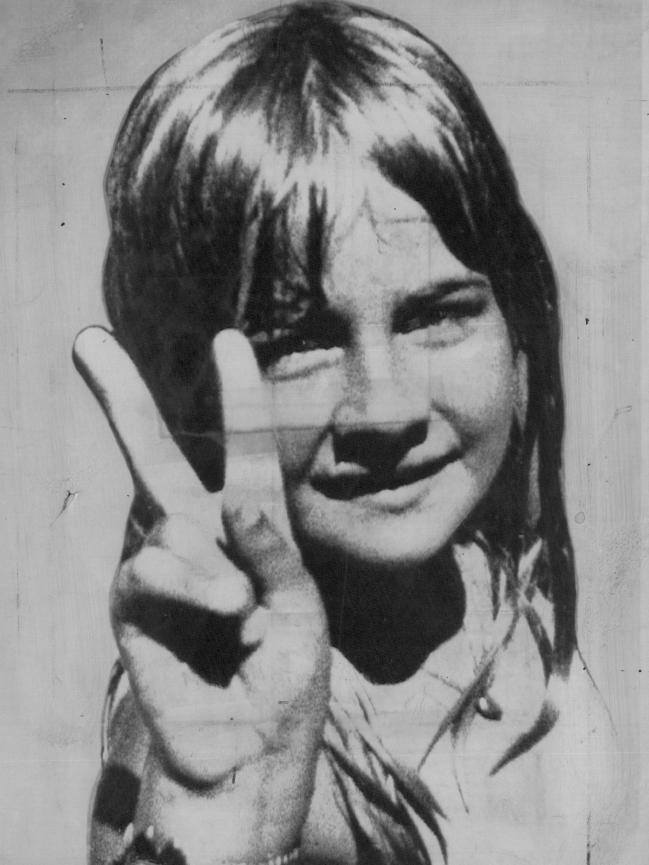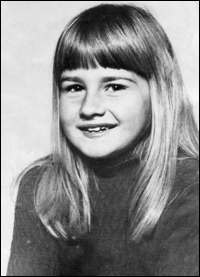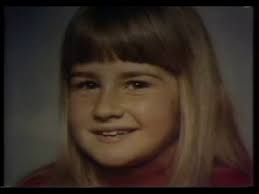


Video plea from Eloise's mother Patsy
Circumstances of Disappearance
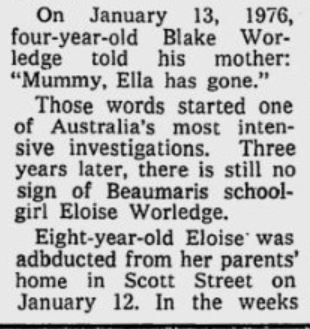
8 year old Eloise Worledge disappeared from her home in the Melbourne
suburb of Beaumaris, Victoria on January 12, 1976.
Her brother raised the alarm about her disappearance when he noticed she
was not in her room at 7.30am. He later told police he heard "robbers" who
kidnapped his sister, but was too scared to say anything at the time because he
thought they would take him too. There was no sign of a struggle.
Investigations revealed no signs of forced entry or a struggle. Police believed
Eloise was lured from her bed by someone she was familiar with and simply left
the house via the front door, which had been left unlocked. Another possibility
not discounted was Eloise may have been abducted by a prowler known to be in
the area at the time. A speeding car down the Worledge's street at 2am was reported
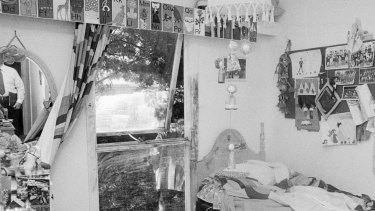
by a neighbour. Bark from a tree outside her window was found on her bedroom
floor. A small hole had been cut in the flyscreen in her window, but forensic
tests revealed it had been cut from the inside. Police believed it was too small
to have been used by the abductor. Because scientific evidence found it unlikely
that Eloise was taken through her open bedroom window, both parents were
initially treated as suspects.
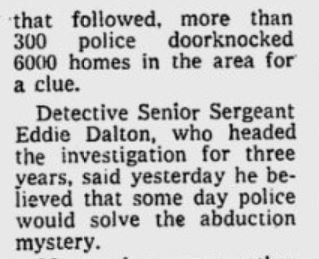
Despite the biggest missing-person's search in Victoria's history and despite a
$10,000 reward posted in 1976 that remains unclaimed, no trace of her has ever
been found. Homicide cold-case detectives began reinvestigating the case in
2001.
Twenty-seven years after Eloise Worledge was snatched
from her bed in the dead of night, her mother yesterday said that the family
had long ago accepted the eight-year-old's disappearance as a mystery.
Speaking after coroner Frank Hender ruled it was impossible to identify who
was responsible for Eloise's disappearance, Patsy Worledge said the family
had "come to our own form of closure years ago".
Eloise Anne Worledge was taken from her home in Scott Street, Beaumaris, in
the early hours of January 12, 1976. A flywire screen on her wind-out window
was partially cut and rolled upwards and the window was fully open.
Her abduction sparked the biggest Victorian missing person's search in
history. Despite a recent 12-month re-investigation of new leads, a homicide
squad detective confirmed the case still baffled police.
Detective Senior Constable Robert Nazaretian told the Melbourne Coroners
Court that despite Eloise's father, Lindsay, being the prime suspect at the
time of her disappearance, a 2001 investigation found no evidence to
implicate either of Eloise's parents as the culprit. And new investigations
of known sex offenders, including a teacher and a librarian at Beaumaris
Primary School, failed to uncover any new evidence, he said.
Outside court, Ms Worledge said the family had been "devoted to learning
from our experiences, to healing and accepting the mystery"."And it is
indeed a mystery. And we don't actually need to know," she said.
Lindsay Worledge was not present at the hearing.
Senior Constable Nazaretian said evidence suggested someone had staged the
scene to look as if the flywire screen was cut from the inside to avert
suspicion from people connected to the Worledges.
The motivation to cut the screen from the inside by an intruder with no
connection to the household seemed inconceivable, he said. But entry, exit
or both was most probably made through the front door, which Ms Worledge
said she had left wide open, Senior Constable Nazaretian said.
The court heard that both Lindsay and Patsy Worledge had been having affairs
at the time and Mr Worledge was depressed about their looming separation. He
was to move out of the house the day Eloise went missing, a fact Senior
Constable Nazaretian described as "striking in its timing".
He said that in 2002 Ms Worledge told police that at the time of Eloise's
disappearance she believed Lindsay Worledge "was involved in the
disappearance as a means of prolonging the inevitable and as a way of
spiting her". Mr Worledge denied involvement in the abduction and a lie
detector test proved inconclusive, the court heard.
Convicted sex offenders interviewed when the case was reopened included a
teacher and a school librarian at Beaumaris Primary, as well as a man who
coached at the Beaumaris junior soccer club. But police could not uncover
any evidence of their involvement in Eloise's disappearance, or any evidence
linking sex killer Raymond "Mr Stinky" Edmunds to the crime.
Suspects at the time included Ms Worledge's two female friends and her
sister, Margaret Thomas, but a reinvestigation of their police interviews
found the links baseless.
Giving an open finding, Mr Hender said Eloise was a shy girl who would not
have voluntarily left home with a stranger. He said significant information
given to police included a neighbour's account of hearing a child cry out
and a car door slam at 2am on the night of the disappearance.
"It is not possible on the evidence to find who were the person or persons
responsible or when and how Eloise met her demise but her disappearance and
presumed death remains suspicious," Mr Hender said.
For a woman who might easily live in the dark, Patsy Worledge instead chooses to live in the light – surrounded by bright colours.
She thinks that way, she dresses that way and she paints that way – celebrating life on canvas, and leaving the interpretation to others. Surrounded by her art works at an exhibition this weekend, Ms Worledge looks at the startling colours that define her creations – bright-eyed children, exotic animals, an abundance of flowers – and says the stories are in the eye of the beholder.
"The stories," she says, "can be created by anybody."
Ms Worledge's personal story is well known. In January 1976, her daughter Eloise, 8, vanished from the family home in Beaumaris and was never found. It was a tragedy that made Patsy Worledge a household name in one of the most publicised cases in Australian history.
Today, approaching her 72nd birthday, she has built another life – built on a spiritual journey that has taken her through immersion in Chinese meditation to encounters with Aboriginal elders and artists. Indigenous art informs her own work: the colours, the dot work, the elevation of the mysteries of life to the canvasses that clutter her home.
"I never really thought I was that good at it but people liked it so I just kept going. You have to keep changing because that's what your heart wants to do and your soul wants to do. I paint from the soul. I don't decide anything, it just happens," she says.
"I've never had any repressive feelings about art. I went to an exhibit recently and the paintings were so boring you wouldn't believe it – pale colours, pale apricots and greens – I couldn't see what it was all about."
Ms Worledge has been painting since childhood, encouraged by her father. "I just used to draw and paint all the time." She stopped for a time in the 1970s, but returned to it a decade later, and has experimented with different styles ever since.
"I used to be a spiritual painter – it was about totally not knowing what you were going to paint – you don't have any mind in it. Jars of colours all around the table, water in the middle and the colour chooses you. The first time I sold a painting I was doing watercolours … I sold them all. It makes your heart sing, and that's what I'm here for."
Her current exhibition is the product of nearly 12 months of work, and features 38 paintings whose titles include We Will Recall The Things That Matter, Sense of Love and Wonder, Boundless Stories of Grace and Glad To Be Alive.
The lesson of her life, and of her art, is simple: there is always hope to be found, a light around the corner, the beauty of something simple like a flower to celebrate. Buoyant of personality and vibrant of appearance – she dresses in the colours that define her paintings – she admits it is not always easy for any of us to celebrate life.
"Sometimes you have to pretend," she says.
"But I don't pretend any more. Always have faith in yourself and what you do in yourself. You have to consolidate your feelings. Not bury them, understand them. I know how many people love me and lot of people don't have to say, it, I just know it.
"I think people would cross the road because they didn't know what to say to me. But I've I always had a lot of beautiful people with me and that's been a blessing."
Updated ,first published
The father of Eloise Worledge, the eight-year-old taken from her Beaumaris home in January 1976, has died with police no closer to knowing what happened to his daughter.
Former teacher and business adviser Lindsay Worledge died two weeks ago, 41 years after Eloise was taken from her bedroom in Scott Street, sparking one of Victoria's biggest investigations and searches.
Her body was never found and the case remains open.
The public concern that a little girl could be taken from her home became the moment that many families started to lock their doors.
The flywire in her bedroom window had been cut, but police scientific experts checked the scene and concluded it had probably been cut from the inside.
The wind-out window had been opened to its maximum 38 centimetres.
Investigators concluded: "On balance, based on all the information on-hand, it appeared more likely that the person or persons responsible for Eloise Worledge's disappearance had affected their entry and exit through a point other than her bedroom window."
Lindsay was treated as a suspect, not because there was any evidence pointing at him, but because there were no obvious alternatives.
After his marriage to Eloise's mother, Patsy, ended in divorce he remarried and tried to live quietly but his name was always linked to his daughter's case, both as a grieving parent and a possible suspect.
In 2003 he told me, "I am amazed at the reaction, even now."
In 2002 he took a police lie detector test, "The results were inconclusive. It did not produce a result which would satisfy police curiosity."
Because forensic evidence indicated Eloise was not taken through the open bedroom window, both parents were investigated.
"We were tangible. There was little else," he said.
"[The speculation] was hardly pleasant. It was not of my making."
He said he had his own thoughts on what happened that night, but they "are an interpretation of nothing. They are just theories".
A police review of the case found, "At the conclusion of investigations into Lindsay Worledge, no evidence in regards to his involvement has been uncovered."
The ultimate head of the initial investigation agreed. Detective Superintendent Warnock believed he was unfairly judged.
"Mr Worledge, I think, has been seen in a bad light," he said nine months after the abduction
"A lot of people think he has acted callously.
"He's not the kind of person who wears his heart on his sleeve. Deep down, he cares about his children and he is very distressed about this whole business.
A death notice said Mr Worledge would be remembered as "a brilliant teacher, a lively companion and for his indomitable courage".
Words: Maddison Connaughton
Photographs: Danielle Bonica, supplied, Facebook
Editing: Gina Rushton
In the back courtyard of a small cafe on Melbourne’s grey seaside, a group of women have gathered around a long table. They have the place to themselves, and are locked in intense conversation about the past — the wild 70s, the end of the Whitlam era, when they were all young parents, living in a bayside hamlet called Beaumaris.
They are talking about a young girl who went missing back then, an eight-year-old named Eloise Worledge, who vanished one night in January 1976, just a short drive from where they all sit now. The case has since become infamous around this area, a whispered story of darkness beneath the suburban malaise.
Some of the women here speak like amateur sleuths, their voices bright with the hope that if they turn a fact of the disappearance this way or that, something new will reveal itself. But this is no true crime club.
Holding court at the centre of the table is Margie Thomas, sharp and serious, an air of Helen Garner about her. Eloise Worledge was her niece and goddaughter. And for nearly a half century, she’s pushed for answers about what happened to her. This has, at times, stirred controversy, even within her own family — through which Eloise’s disappearance has cleaved a deep scar.
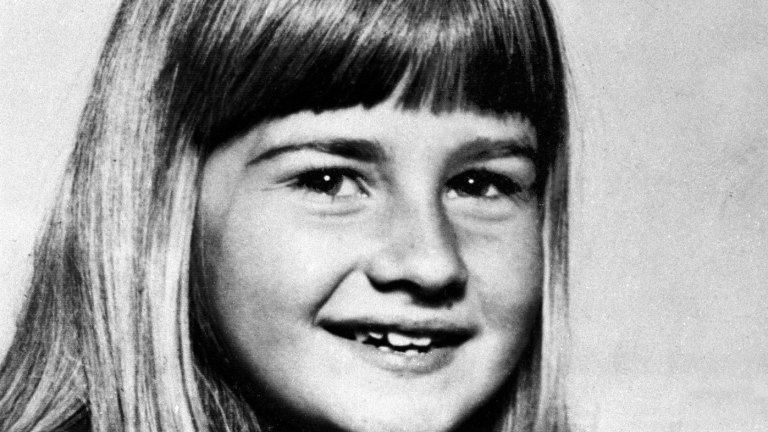
Most of the women at the table knew Eloise too, as Ella, the quiet eldest daughter of their good friend Patsy Worldege, who passed away a few years ago. They speak of her as gorgeous, a blunt fringe cut into her sandy blonde hair, and shy too, always trailing behind her younger sister.
“She was lovely,” says Megan Walton, a close friend of Patsy’s who had a son the same age. “She was never loud or aggressive or rude or naughty. She was just really sweet, gentle.”
Eloise loved making art, like her mum, and was deeply bookish, like her dad. One friend remembers that a popular kids magazine Cricket, sometimes called the “the New Yorker for children”, was her favourite.
“She loved to read, which is always a good thing for a child, I think,” Margie says. “I loved being the auntie… We used to joke about it, you know, auntie is allowed to spoil, but the parents aren’t.”
Margie has convened this meeting as the 50th anniversary of Eloise’s disappearance looms. She wants to organise a memorial to commemorate her niece’s life in some formal way.
But she has another goal, too. She wants to try and push the police to investigate new leads that have emerged in the decades since her niece vanished. She wants justice, if such a thing is even possible in a case like this.
She tells the group that for the first time in decades the police have just summoned her to a meeting, and told her they have some news about the case that she’ll want to hear.
Sitting quietly at one end of the table is Jane Mirvis. In her 80s, she’s striking, impeccably put together, careful with her words. She was best friends with Eloise’s mother Patsy and lived directly across the street from the Worledge home in the ’70s.
She remembers, keenly, the day Eloise disappeared — she was in her front yard, around 8am, when an awful scream pierced the morning quiet. It was Patsy.
“Patsy came over and said, ‘I can’t find Ella,’” Jane recalls. While her friend, an artist, an extrovert, was prone to dramatic swings of emotion, this was on another level.
She followed Patsy back across the street — where their young children played together most days — to the Worledge’s small weatherboard house.
“We got up and had a look and unfortunately her bike was there,” Jane says. “Because otherwise I would’ve said, look, she’s out riding the bike for sure.”
Eloise had just gotten a bicycle for Christmas, a few weeks earlier, and in the long summer days since the eight-year-old had been riding it endlessly. But the bike was there, and she was not. She had disappeared from her bed in the night.
The morning of January 13 is burned in Margie’s mind, too, from the moment she picked up the phone to hear her sister’s panicked voice.
“She was hysterical,” Margie says. “She couldn’t find Ella. ‘She’s gone. Come ‘round. Come ‘round’.”
It was a short drive, no more than a few minutes, but Margie says she sped over, still in her pyjamas and a dressing gown.
At the Worledge house, she found Patsy in a terrible state, shaking. Patsy’s husband, Lindsay, was there too, seemingly stunned. Though he was always far more reserved than his wife, he was never one to be lost for words. Jane was sitting at the dining table, with Eloise’s two younger siblings, Anna and Blake.
“Lindsay had called Beaumaris Police Station, and there was no sign of the policeman there,” Margie recalls. So, she dialled the emergency line and handed the phone to him.
He told them: “My house has been broken into overnight and the only thing missing is my eight-year-old daughter”.
Years later, the police operator would remark that this call stuck in his mind more than any other he received. The lack of emotion the caller displayed shocked him, given the gravity of the crime being reported.
Lindsay was still on the phone to police when the local sergeant, Cyril Wilson, finally arrived at the house.
“Have you searched the house?” Wilson asked them all. “Children don’t just disappear.”
He was nonchalant, shockingly so considering what was to come, but this reflected just how unfathomable a crime like this was for this time, for this place.
“That was really why I liked this area because it was so quiet and it was feeling very safe,” Jane says.
Beaumaris was a pretty isolated place, she says, without even a train station, where everyone knew their neighbours. Kids would roam from house-to-house in the afternoons, told only to be home by dinner. Parents worried about their wallet getting snatched at the beach, not their children vanishing.
With the clarity of hindsight though, some are angry about the way the case was treated in those vital first hours.
“The local policeman was just appalling when you think what he did tramping around and, you know, dropping cigarette butts and all the rest,” Jane says.
For Margie, too, this remains a sore point. “The crime scene was basically walked all over… Nothing was fenced off.”
More police units soon pulled up to the Worledge house, both uniformed and plain-clothes. John Bodinnar was among them.
“I was a detective senior constable at the Moorabbin CIB [criminal investigation bureau],” he recalls. “I was 27. An enthusiastic young guy with brown hair, not grey.”
He’d been working in the area for a few years and always found it pretty sleepy. “We had a lot of shoplifting,” he says. “We had a lot of petty crime, and we had a lot of crime committed by children.”
The young detective had never gotten a call like this one before.
Lindsay Worledge, his face dominated by square eyeglasses beneath bushy eyebrows, met Bodinnar and his partner at the door. Patsy, slim and tanned, her hair with its distinctive pageboy cut, appeared behind her husband.
Bodinnar says they were shown to Eloise’s room, where the bedclothes were mussed, as if someone had slept there and thrown covers back to get up in the morning.
The thing that wrenched the detectives’ attention though was the fly screen covering the window right next to the single bed. The metal mesh had been cut, or ripped, and rolled up into the room. The window was wound open to its widest point. There were a few pieces of tanbark on the ground, too.
It was immediately clear to Bodinnar that this wasn’t a kid who’d run away, this was an abduction.
He recalls his partner turning to him. “He told me to go out and tell Sergeant Wilson to wait at the front door and not touch anything, but that was too late,” he says. “He’d already touched everything.”
The police separated the parents and began trying to establish a timeline of what happened in the hours before Eloise vanished.
Patsy said that she’d left home after dinner the night before for her weekly jazz ballet class, at a church hall just a few minutes’ walk from the house. Afterwards, she’d popped into Jane’s place for a drink. When she got back home, Lindsay was watching TV. She told the police that she checked on the children before going to sleep, and all of them, including Eloise, were in their beds.
“On face value it was really quite important,” Le Couter says, unsure of why it was discounted. This letter appears to have been lost in the decades since.
Le Couter’s work on the window, though, did have an immediate impact on the case. Because he and Brown determined that the flyscreen had, in all likelihood, not been cut from the outside but from inside Eloise’s bedroom.
The dust on the windowsill was untouched, and cobwebs still hung between the opened window and its frame, which meant it was unlikely the window had been opened further than its chain. How the screen had been cut and rolled up would have been very difficult to do from the outside with so little space.
This all added up to one thing.
“It was more probable that the child was not taken out through the window,” Le Couter says. “It’d been staged.”
It seems someone had wanted to make it look like Eloise was taken out the window. But the evidence showed she was probably carried right out the front door.
This finding swung even more intense focus onto Eloise’s parents and their circle. Salacious rumours swirled that Lindsay and Patsy were swingers, something friends say wasn’t really the case. But it did emerge that Patsy had been having an affair, for months, with an associate of Lindsay’s, a man named Noel Anthony.
Many in Patsy’s sprawling friendship circle were questioned. Police quizzed Margie on her relationships with men, her friendship with Lindsay, and asked her straight out if the two of them had taken Eloise.
″ I didn’t have a problem saying, no, I hadn’t done it,” she says. “I didn’t get shirty about it at all. It just seemed, to me, strange. I think they were genuinely looking and didn’t have anyone really in mind.”
Jane remembers being driven into police headquarters in Melbourne for an interview. “There was another friend ... myself and Patsy were all taken into Russell Street and questioned,” she says.
She recalls police telling them, separately, that the others had confessed, just to see their reaction. “We actually heard Patsy screaming, literally screaming,” she says, “saying, ‘Really don’t be so ridiculous.’”
The police later placed Patsy and Jane in a room together, secretly recording them. But once alone, all they did was complain about the police’s manner, and puzzle over the facts of the case.
By February that year, police were left with just a handful of leads that went nowhere. Among them, multiple sightings of young men acting strangely around the Worledge home on the night of Eloise’s disappearance and of a suspicious green 1966 Holden station wagon seen on the street.
Also the sound of a car door slamming at around 2am on January 13, 1976, reported by two separate neighbours mere metres from the Worledge house. One was also sure she heard a child cry out at the same time.
Just over a month after Eloise’s disappearance, the investigating taskforce was disbanded. The detective in charge told the media: “We have exhausted all the avenues open to us. And there are more pressing problems to deal with.”
The circus moved on, and eventually the public did too. While locals say this was the end of a sort of innocence — of unlocked front doors and kids playing in the street until dusk — the reality is that to most, in time, Eloise became a ghost story.
It was her family who was left to reckon with the reality of her loss, how to continue to live in the wake of something so shattering.
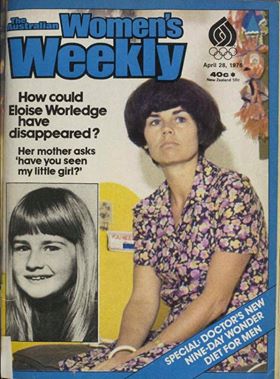
There’s a photo of Patsy in April 1976 from an interview she did with the Australian Women’s Weekly. In it, she’s sitting on Eloise’s bed, the sheets still stripped for forensic testing. She looks like the survivor of some terrible accident, dazed, amidst the wreckage.
“My main fear is that people will forget,” she told the magazine. “If they do, Ella will never be found.”
Lindsay and Patsy separated officially in the months after Eloise’s disappearance. Both went on to marry others. They faced another shared tragedy two decades later, when their son Blake was killed in a car accident.
Lindsay died in 2017, and Patsy a few years later, in 2022. She told reporters, before she passed, that she’d been able to find some sense of peace with Eloise’s loss.
For a long time after Eloise vanished, Margie says she felt that she couldn’t even move house.
“Because if I wasn’t there… she wouldn’t know where I was,” she says. “And so, I stayed there and stayed there and stayed there because I thought, if she comes here, then I’ll be there.”
Years passed, decades, without any word. Until in 2021, news broke of shocking crimes committed at Beaumaris Primary School, where Eloise had been a student when she disappeared.
ABC reporter Russell Jackson uncovered that no less than four teachers at the school had sexually abused students throughout the 1970s. Rather than being stopped by authorities, these men were moved around the Victorian education system.
Immediately, locals wondered if there might be some connection with Eloise’s disappearance. They point out that one of the most high-profile victims, footballer Rod Owen, was in Eloise’s year at school.
The school wasn’t an angle that was ever canvassed in the original investigation. John Bodinnar says that, to his knowledge, police in Beaumaris didn’t know about these teachers when he was working in the area, despite the fact parents had complained about some of them to the school.
“There was no hint of any of these paedophiles at the local school,” he says. “It is certainly relevant given that it transpired at the time of Eloise’s disappearance.”
A state inquiry set up to examine the school abuse did briefly broach the question of Eloise Worledge. But it reported the information presented “did not reveal any connection between Eloise’s disappearance and the matters within the scope of the terms of reference”.
David MacGregor, one of the abusive teachers eyed by the Beaumaris Inquiry, was interviewed by police during a reinvestigation of the Eloise Worledge case during the early 2000s.
A friend of his, another local man named Alistair Webster, who ran Beaumaris’ junior soccer club, was also interviewed.
A parent at Beaumaris Primary, Webster had a significant rap sheet, which included sexual abuse.
Rob Walton knew both MacGregor and Webster through the junior soccer club and says he was shocked to learn of their crimes.
The two men, he says, ” were poles apart as personalities”.
“[MacGregor] was the original mild mannered Mr King, you know… he’d come to soccer practice with all the soccer nets to put up and the balls and the flags and things. And he was very personable and not very forthcoming,” he says. Webster, on the other hand, was a stern Scotsman, soccer-obsessed.
The reinvestigation did not find any evidence linking these men to Eloise Worledge’s disappearance. In fact, it didn’t yield any new leads at all. And in 2003, a coroner ruled that Eloise had likely died, but could not make any findings about what happened to her.
For Margie, the question of whether Eloise’s disappearance could be linked to her primary school is a difficult one to consider. She’s found herself turning over memories, trying to pinpoint whether there was any change in Eloise’s behaviour before she disappeared. Even small things, like her niece’s habit of biting her nails, can seem like a clue.
“I used to joke about it and say, give me a taste, you know, a nibble, you’d have a laugh about it,” Margie recalls. But really, she says, there’s nothing that stands out.
Yet she believes that police need to look more seriously at the school, whether there is any connection, even if it’s a painful territory.
“This is part of the picture, and we cannot, not think about it and we have to investigate it,” she says. “I’ve got to think down those lines now. We can’t just dismiss it. It was happening at the school.”
As the 50th anniversary of Eloise Worledge’s disappearance approaches, Margie is busying herself with memorial planning. She wants to have the service at Beaumaris beach, where she last remembers spending a lazy, sunny afternoon with Eloise, just before that fateful night.
The memorial will be the first time she’s ever formally marked her niece’s disappearance; the grief has almost been held in suspended animation. By now though, the little girl would be nearing 60. She would’ve lived a whole life.
Margie stumbles a little, thinking of what she wishes she could tell Eloise. “I still love her,” she says, eventually. “And that I’m sorry that we weren’t able to find her.”
Meanwhile, there has been some movement on her other goal, to spur Victoria Police into reanimating this investigation. In December, she had her meeting with the Missing Persons Squad to talk about Eloise’s case.
There, a detective told her something that shocked her.
“He said that they’ve come to the conclusion that Patsy and Lindsay were not involved, which is pretty monumental,” Margie says.
But in the wake of this revelation, one question is thrown into even sharper relief: If not Eloise’s parents, then who?
Victoria Police say the investigation into Eloise’s disappearance “remains active and ongoing” and confirm no evidence implicating Lindsay or Patsy Worledge in the crime has ever been found.
Margie says she wants the police to raise the reward for information about Eloise’s disappearance. It has sat at $10,000 since it was first offered in 1976.
She thinks something like that could draw out people who have information that hasn’t yet surfaced.
“Someone who might have been thinking for a while, you know, ‘I’ve been thinking about this. Oh, I didn’t bother telling you. It’s only so small,’ ” she says. “There may be pieces of the jigsaw puzzle they might be able to fit together.”
“Every case and therefore every reward strategy is different. Often we only get one chance to announce a reward and so we have to ensure we make the best use of the announcement,” a Victoria Police spokesperson told the ABC. “Each case is assessed on its merits and it is our utmost desire, in every case, to get the information we need and solve it.”
They added that police remain hopeful the case can be solved if the right information would come to light.
This is Margie’s hope too, that there’s still someone alive who knows the full truth of what happened to her niece, and that they are finally willing to tell it.