 Yadong QI
Yadong QI
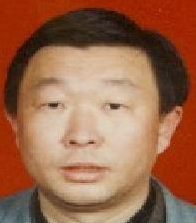
Yadong Qi, 41, was last seen in Darling Harbour Sydney NSW on 18 October 1998, and is believed to have attended Star City Casino that evening. He speaks no English and has not been seen since.
Yadong is described as being 175cm tall with black short hair, brown eyes, medium build and an Asian appearance. He was wearing a blue long sleeve collared shirt with white flecks, dark blue trousers and black shoes.
If you have information that may assist police to locate Yadong please contact Crime Stoppers on 1800 333 000 or via Crimestoppers.com.au.
STATE CORONER’S COURT OF NEW SOUTH WALES
Inquest:
Introduction 1.
2. This is an inquest into the discovery of unidentified human remains at the Royal National Park, Sutherland on 22 September 2018. The discovery of human remains in a garbage bag indicates extremely suspicious circumstances. The person may have died as a result of homicide. Even if the death was accidental or natural some person has evidently placed the remains in a bag and attempted to hide them to avoid their discovery.
The role of the coroner and the scope of the inquest
3. 4. 5. The role of the coroner is to make findings as to the identity of the nominated person and in relation to the place and date of their death. The coroner is also to address issues concerning the manner and cause of the person’s death.1 A coroner may also make recommendations, arising from the evidence, in relation to matters that have the capacity to improve public health and safety in the future if they appear necessary or desirable on the evidence.2 In this case the investigation focussed primarily on the identity of the human remains. 5. The role of the coroner is to make findings as to the identity of the nominated person and in relation to the place and date of their death. The coroner is also to address issues concerning the manner and cause of the person’s death.1 A coroner may also make recommendations, arising from the evidence, in relation to matters that have the capacity to improve public health and safety in the future if they appear necessary or desirable on the evidence.2 In this case the investigation focussed primarily on the identity of the human remains. This is a mandatory inquest pursuant to section 27 Coroners Act 2009 NSW.
The evidence
6. 7. The inquest was held at Lidcombe Coroners Court on 20 February 2024. At that time some issues arose for further investigation and the matter was adjourned. The inquest re-convened and concluded on 6 February 2025. At that time, there was no assurance that the outstanding information could be obtained quickly or at all and a decision was made to close the inquest. This matter has had a lengthy investigation and the inquest was delayed by a number of issues including difficulties encountered in the cross territorial investigation, difficulty in making contact with witnesses outside the jurisdiction, the extensive scientific testing and forensic examination that took place or was requested, the change in officers in charge of the investigation and court backlogs associated with the COVID-19 pandemic, among other factors.
8. 9. A brief of evidence was tendered, including witness statements, police reports, photographs and expert reports. While the brief contains the results of many days of investigative work I will only refer to these detailed records briefly within the scope of these written reasons. Nevertheless, I have had the opportunity to carefully review all the documents provided. The court also heard oral evidence from one of the Officers in Charge of the investigation, Sergeant Peter Ruskin. He took over the investigation recently but was able to provide the court with a comprehensive summary of the information collected over previous years. I thank him for his part in this investigation and for the summary he provided.
10. Section 81 (1) of the Coroners Act 2009 (NSW) requires that when an inquest is held, a coroner must record in writing his or her findings in relation to various aspects of the death. These are my findings in relation to the human remains found at Sutherland on 22 September 2018.
Discovery of the human remains
11. On the 22 September 2018, Mohammad Shadmany and Songyan Li were driving to the Figure 8 Pools in the Royal National Park. At about 4pm, whilst driving to the location, Mr SHADMANY stopped his vehicle just off Sir Bertam Stevens Drive in the Royal National Park, approximately 2 kilometres from the intersection with McKell Avenue, as he needed to go to the toilet.
12. Mr Shadmany scaled down the embankment into the bush. Almost immediately he saw a round object less than a metre away. The object caught his attention because he believed that it looked like a skull. It was smooth, round and partially buried. He then saw what looked like teeth near the skull and a bag which appeared to have rib bones exposed.
13. Mr Shadmany returned to his vehicle and immediately told his friend what he had seen. They returned to the skull like object and took photographs of the bones, as well as a yellow and black vehicle registration plate VTT607 that was sitting on a nearby rock. Mr Shadmany tied a plastic bag to a tree to mark the location and they left to contact police. Immediate investigation after the discovery
14. Police from The Shire Police Area Command established a crime scene. Police from Wollongong Crime Scene attended and took photographs of the scene. NSW Police Rescue Squad attended and assisted investigating police to gain access to the location and conduct an examination.
15. On closer investigation, Police found the skeletal remains were protruding from a black plastic garbage bag, which was in turn partially within a black, red and white checkered nylon bag. The bags and skeletal remains showed obvious signs of fire damage.
16. An immediate search of the nearby area was conducted. Police also located a human femur bone a short distance to the north, and a partial human femur bone was located about 30 metres away down a slope in a north-easterly direction. A pair of shoes in a grey plastic shopping bag was located approximately 30 metres to the south-east down another slope. The shoes were heavily exposed to the elements with soil and plant matter growing within them. There was nothing to conclusively link the shoes to the bones.
17. A larger scale search was conducted by police on the 24 September 2018 but there were no further bones or anything that could be linked to the remains found.
Cause and manner of death
18. The skeletal remains were taken to Glebe morgue and examined by forensic pathologist, Dr Bernard Ions on the 26 September 2018. Dr Ions was unable to determine a cause of death and noted that the skull was missing large fragments, which could be the result of fire or trauma, but he could not be sure which.
19. Dr Ions stated that the skeletonised bones showed evidence of the effects of weathering and fire.
20. I accept Dr Ions opinion that it is not possible to identify a medical cause of death.
21. I have considered carefully whether anything can be said about the manner of death. Given the remains were placed in a garbage bag and found in bushland, it is safe to assume that suspicious circumstances exist. However the precise nature of those circumstances is currently unclear and no firm finding in relation to the manner of death can be made.
Other investigations
22. NSW Police made numerous inquiries and at some point Strikeforce GLEAM was formed.
23. Police located the owner of the vehicle registration plate that was found nearby. The plate belonged to a 1999 Holden Rodeo. The vehicle had been reported stolen between the 19 and 20 March 2018 from outside an address on the Old Prices Highway in Engadine. No suspects were ever arrested for the theft. The plate did not show fire damage.
24. The bag of human remains had fire damage. Police were able to confirm that the area where the bones were located had been subject to a controlled backburn on 20 January 2018, some months before the vehicle had been stolen. This led police to believe that it was unlikely the plate was connected to the remains. Further there was no other evidence tying the vehicle theft to the human remains.
25. On the 17 October 2018, police returned to the crime scene and a second search was completed. The area around where the bones had been located was excavated using a mechanical sieve. During the sifting process, a human tooth and tibia bone were located. These were tested and confirmed to belong to the same skeletal remains. Other bones found belonged to animals and were subsequently discounted as they had no relevance to the investigation.
26. The human bones were further analysed by Anthropologist, Dr Denise Donlon, who subsequently produced a report. Dr Donlon made the following findings:
• There was no duplication of any bone and so it was reasonable to believe they all came from the same individual.
• The bones likely belonged to a male aged between 25 and 46 who was between 173 and 186cm in height.
• That person was likely of Caucasoid/European ancestry
27. Following this, a DNA sample was sent to the Genetic Ancestry Lab at the University of Canberra and a Phenotyping analysis was conducted. This kind of analysis can generate the likely ancestry, hair and eye colour of a donor from the DNA sample. The report was completed by Dr Dennis McNevin and independently analysed by Dr Runa Daniel from the Forensic Service Department of the Victorian Police. The results of the phenotype analysis were:
• The donor is likely to have East Asian ancestry (which differed from the initial opinion of Dr Donlon).
• They are likely to have black hair and brown eyes.
28. An opinion was also sought from Jennifer Menzies, an expert in body decomposition. She estimated that there was a minimum of nine months between death and discovery. The lack of soft tissue and obvious greasiness suggested a possible post-mortem interval of more than 3 years.
29. Carbon dating of the bones was conducted by the University of Waikato, which indicated the year of death was post 1990.
30. Based on these various tests, the profile of the skeletal remains found in the Royal National Park are believed to be that of a male of East/South-East Asian ancestry, 2146 years of age, between 172.6 and 185.45cm tall with black hair and brown eyes. His death most likely occurred after 1990 but before early 2018.
31. Nuclear, mitochondrial and Y-STR DNA profiles were developed from the thigh bone of the skeletal remains. These profiles were compared to DNA profiles on the Interpol DNA Database and National Criminal Investigation DNA Database with no match being found. A familial search was conducted on the New South Wales DNA Database also with a negative result.
32. Enquiries were made with the NSW Police Force Science and Research Unit to conduct genetic genealogy testing on the bones in an attempt to identify the identity of the deceased person. This is a process which uses public DNA databases to search for a genetic link with the unidentified remains. The court received information from Dr Jennifer Raymond, dated 16 February 2024. Dr Raymond is an experienced crime scene examiner in the NSW Police Force Forensic Services. She advised that she had been involved in a small number of forensic investigative genetic genealogy cases. She co-leads a project to assess and implement Forensic Investigative Genetic Genealogy (FIGG) for the NSW Police Force. The program is still within its infancy.
33. Dr Raymond advised the court that DNA had been extracted from a section of the femur of these remains by NSW Health Pathology Forensic and Analytical Science Service (FASS) in September 2022.
34. In October 2022, the DNA extract was delivered to the Othram Laboratory in Houston Texas, USA for the purpose of analysis to prepare a profile suitable for upload to commercial DNA databases for forensic investigative genetic genealogy. Once that was complete, it was stored on the NSW Police system. On 13 March 2023 the NSW Police Commissioner formally approved the use of FIGG and the sample was uploaded to the GED match Pro database.
35. That process indicated that the unknown individual was likely to be East Asian. An external genealogist was contacted. NSW Police were advised that genealogical research where relatives may be living in mainland China will be difficult. It was also suggested that re-sequencing the DNA may achieve a higher quality result. The Court was informed that genealogical avenues are still progressing, but there is absolutely no guarantee when or if further results could be obtained.
National Missing Persons Registry
36. At the same time, other inquiries were being made.
37. It was decided that using all the information which had been collected it was necessary to compare the possible profile of the unknown remains from Sutherland, against national records of long term missing people. A search of the National Missing Persons Registry identified 565 long term missing persons that were males. Through a process of elimination described in the statement of Sgt Peter Ruskin, that number was greatly reduced, for example males in the wrong age group, males who were not of South Asian/South East Asian origin were excluded. Eventually there were two males who could not be eliminated at that time. These were Jackson Takwai Lee, who was reported missing in 1988, and Yadong Qi, who was reported missing in October 1998. Since then, police have managed to rule out Jackson Lee by obtaining a DNA comparison. Yadong Qi could not be eliminated.
Mr Yadong Qi
38. Mr Yadong Qi was born on the 4 May 1957. He flew into Sydney at about 8.30am on 18 October 1998 from China. Mr Qi was collected by friends living in Australia, Mr BaoHong Zhang and Ms Liguang Chen. He went back to their Westmead address. Mr Qi apparently rested for a short time and around 11.30am took a taxi to Star City Casino, arriving at around 12.30pm. At around 6pm he is reported to have telephoned his friends and told them that he would stay at the casino overnight. There are no reported sightings or contact after this time.
39. Mr Qi did not board his pre-booked return flight the following week
40. On 20 October 1998, Mr Bao-Hong Zhang and Ms Liguang Chen attended the Parramatta Police Station and reported Mr Qi missing. They told police that they were doctors working at Westmead Hospital and living at 4/27 Jessie Street, Westmead. Mr Qi was described as a friend or “the brother in law of Ms Chen’s brother in law.”
41. They told Police that Mr Qi spoke no English, was diabetic, and had attended Star City Casino with $10 000 in Australian currency. They said he was married with two children and worked in the building industry in China. He was described as a man of wealth who had visited Australia on two earlier occasions.
42. Police made numerous investigations in relation to this missing person report. A review of available CCTV could not place him at the casino, but a taxi driver remembered dropping him off in the general vicinity, near the Sydney Aquarium. The Department of Immigration confirmed that there was no record of him leaving the country and stated that he had applied for a four year business visa. No hotel or other flight bookings could be found. There was no response to a number of media strategies or articles in Chinese newspapers.
43. NSW Police also contacted Mr Qi’s wife in China. She apparently advised that she had had no further contact and that Mr Qi only carried cash, so there were no financial records to interrogate. Checks with a variety of financial institutions and the RTA were undertaken, all with no result.
44. Inquiries continued, including contacting Mr Qi’s business associates, but there were no strong leads. In January 1999 Mr Zhang and Ms Chen, who had originally reported Mr Qi missing, left Australia to take up medical jobs in the USA. They did not leave a forwarding address with NSW Police.
45. In August 2003 Detective Inspector John Betell contacted the last known telephone number for Mr Qi’s family home in China. He spoke with a Chinese male through an interpreter and was informed that Mr Qi’s family had left those premises some two years prior and had migrated overseas. The male was unsure where they had gone but is reported to have said he thought it was Australia.
46. NSW Police came to believe that it was likely Mr Qi and his family were living under an assumed identities but this was never confirmed.
47. In 2010 the matter was reinvestigated, and NSW Police issued a request to Interpol, seeking its assistance to locate Liguang Chen, given that she had been involved in making the original missing person report.
48. On 3 April 2013, as a result of information received, Detective Sergeant Paul Fenwick made telephone contact with Ms Liguang Chen. She was living in San Diego, California, USA. She told the officer that she had only met Mr Qi through her sister in law and had only just met him when he went missing. She stated that her sister in law lives in China and they had had no contact for two years. She is reported to have been “difficult and evasive” and showed no apparent concern for Mr Qi. Later attempts to contact her again were thwarted and there was no response to a number of voice mail messages left. Once again NSW Police though the most likely scenario was that Mr Qi had become an illegal immigrant.
49. On 21 February 2024 the Department of Home affairs, Border Intelligence advised that Ms Chen left Australia in 1999 and had not returned. There were two records for Mr Zhang (same name and date of birth) one had him arriving on 19/1/1998 and not leaving and the other indicated he left in November 2000 and had not returned. A vehicle in his name was disposed of on 11/2/1999 and there were no other registrations. His drivers licence expired on 18/3/2022 and had not been renewed.
50. A further request was made through Interpol to ascertain the whereabouts of Mr Zhang and Ms Chen. There has been no response to date. The court was informed that Interpol inquiries can sometimes take years and there is no knowing when further information will be received.
51. I have considered all the evidence before me and I am not satisfied that Mr Yadon Qi can be ruled out at this stage.
Where to from here ?
52. There are currently two possible sources of further information outstanding. Firstly, that FIGG may be able to locate a related person and that this could subsequently provide further leads. Secondly, that Interpol could provide further information which might rule Mr Yadon Qi in or out. NSW Police were unable to give a time line for either. The court was faced with the prospect of continuing to adjourn this matter indefinitely in the hope that further information is obtained.
53. The court was informed that Detective Senior Constable Daniel Warner of the Homicide Squad will keep carriage of the matter and that the police investigation will remain open until these final inquiries have been conducted. Until that time I do not authorise the destruction of any exhibits or the disposal of any remains.
54. Nevertheless, I have decided to close this inquest. Should any further information become available the matter will be re-opened. NSW Police have been informed that any new evidence should be brought to this court’s immediate attention so that consideration can be given to re-opening this matter.
Findings
55. For the reasons set out above, I make the following findings pursuant to section 81(1) of the Act,
Identity I am unable to properly identify the deceased, whose remains were found in bushland at Sutherland on 22 September 2018.
Date of death
He died at some point between 1990 and early 2018.
Place of death
His place of death is unknown
Cause of death
His cause of death is unknown
Manner of death
His manner of death is unknown.
Conclusion
56. I thank the investigating officers, particularly Detective Sergeant Ruskin, Detective Senior Constable Warner and other officers who have taken investigative steps in this matter over the years. I trust investigations are ongoing.
57. I thank Mr O’Donnell for assisting in this inquest.
58. I close this inquest.
Magistrate Harriet Grahame
Deputy State Coroner
February 2025
NSW State Coroner’s Court, Lidcombe